The Masters of Bagamoyo

My guide Peter and I stopped for tea at a biker joint in the middle of the desert in Nowhere, South Africa, and were chatting with the wizened proprietor behind the bar. He asked me where I was going next and when I told him he became very animated.

“Ah, Bagamoyo! I love that town, so much history and interesting art and culture. I worked in Dar-es-Salaam for several years but would escape up to Bagamoyo as often as I could.” It was a ringing endorsement from an unexpected source, and Bagamoyo has proven to be all he said and more.
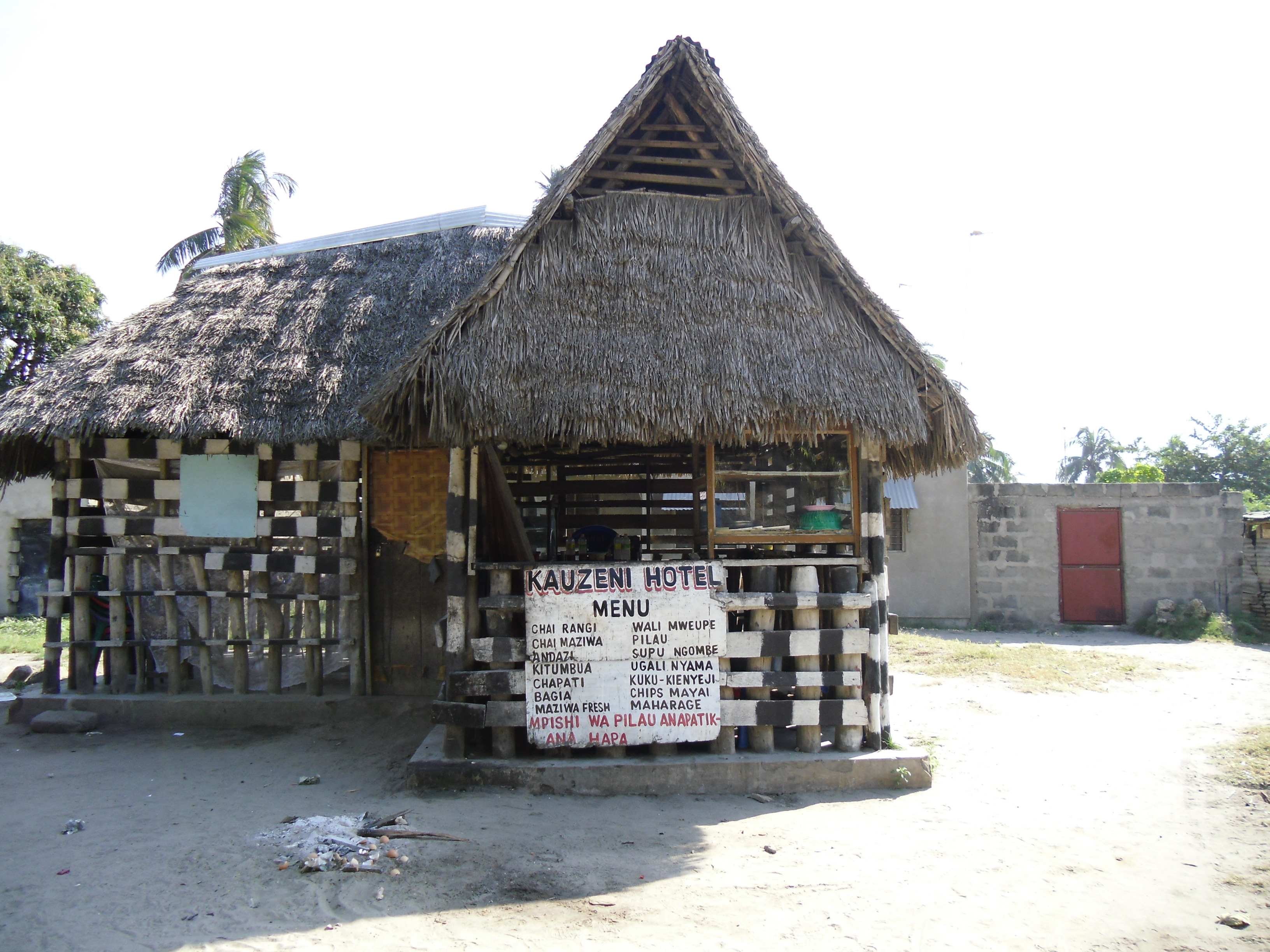
It’s Tanzania’s oldest town, officially founded in the late 1700s, but there are ruins of a mosque that date back to the 1200s. It was the original capital of German East Africa and a leading port for trade, a place where explorers geared up before heading to the interior of Africa in search of the source of the Nile, and where traders paused before taking ivory or slaves from the interior to Zanzibar. “Bwaga-moyo” means “lay down your heart,” which lends itself to multiple interpretations, but the one most embraced is “lay down your load” in honor of the porters who had labored so hard to get there. 

There are some 40,000 people living in Bagamoyo. It’s a fascinating mixture of cultures courtesy of Arab and Indian traders, German colonialists, Christian mercenaries and tribal Africans. It was once a great port, but no longer; while the southern tip of Zanzibar is directly off the coast of Bagamoyo, to get there by either boat or plane you have to drive south to Dar-es-Salaam before heading north again to Stone Town. But it appears that’s about to change. Ambitious plans are underway to expand the port, build an airport and upgrade the rail facility, all because “Dar” has become so congested as to be nearly unnavigable. There are only a few paved roads in Bagamoyo, but that will likely not be the case in a few years time.

That’s progress one supposes, and it will enhance the quality of life for many people here, but it’s disappointing also, because Bagamoyo’s charm is in its lack of pretention. There are a few cars, a few more trucks and of course the dala dalas – the public transport buses – but many more bicycles and motorbikes and three-wheeled bajaji on the dusty, sandy streets. Especially Chinese-made motorcycles. At many street corners there will be five or six of them, the guys just hanging out, and initially I assumed it was evidence of a high unemployment rate or some rite of passage, but in fact these are Bagamoyo’s taxis, and for 1000 Tanzanian shillings, about 62 cents, they will take you anywhere in town.
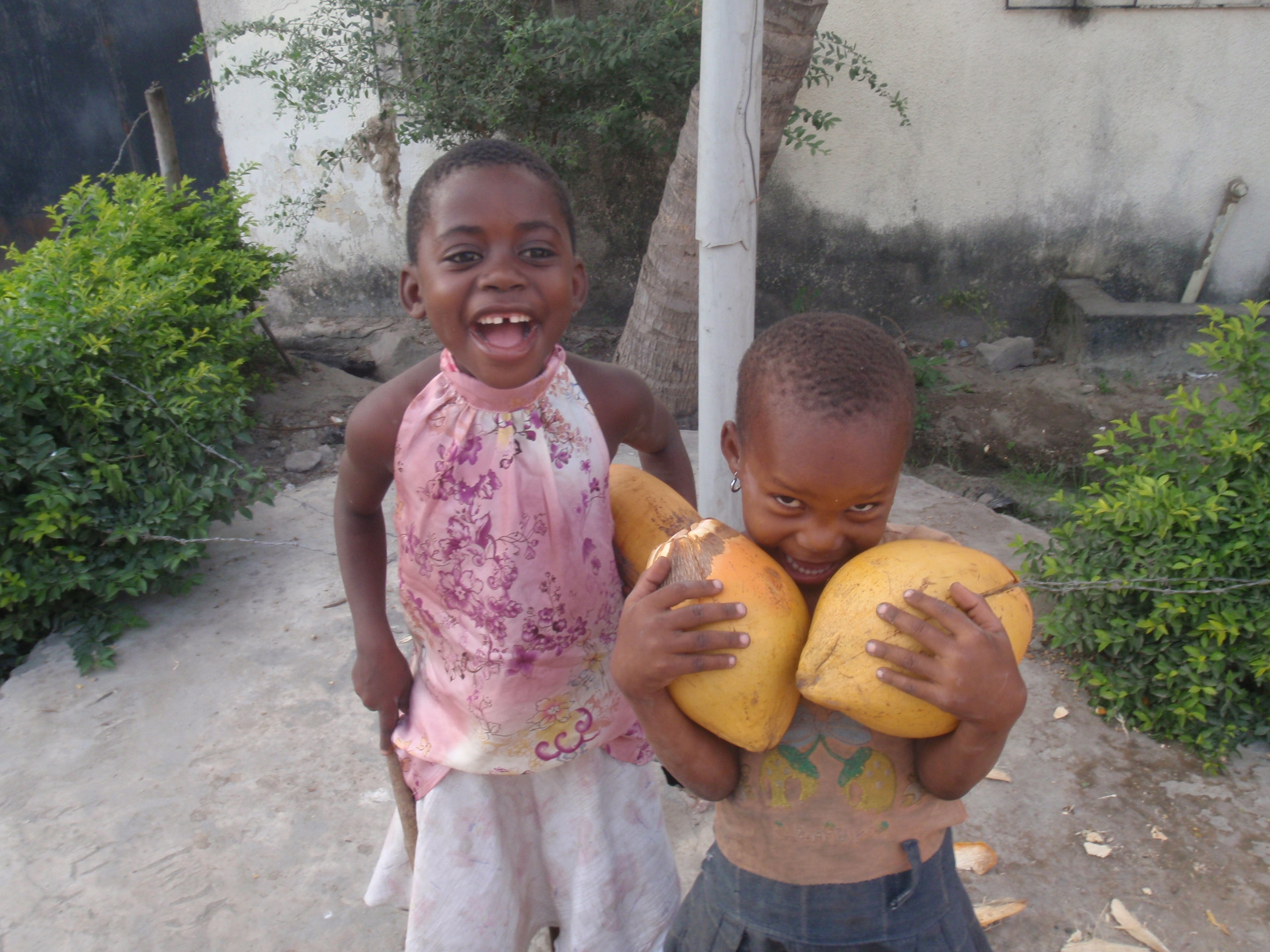
There is a wonderful beach and one or two decent beach hotels; a thriving fish market; a boat-building business that turns out the traditional sailing “dhows”; the oldest mosque and oldest Catholic church in Tanzania; a large, walled-in soccer field where we saw a fight break out between a fan and a game referee — in the middle of the game; a few government buildings and many shops. But what makes Bagamoyo special are the people, their smiles and their spirit and their stories.

And more than anything this is an artist’s community, with an art college, an art market in the center of town that is everyone’s favorite place to hang out, and smaller art shops and galleries/studios/huts everywhere. The artists themselves are some of the most engaging people you could ever meet, and here are some of my favorites.

Idd Mnyamili

His smile lights up the art market and beyond. Some people call him “Obama” because of that smile, others call him “Mchena”, because they think he has Chinese eyes. But most call him Idd, pronounced Idi, like Idi Amin. He explained to me that his first name has something to do with the end of Ramadan and the opportunity to eat again, but he really isn’t sure why his father gave it to him.

He used to hang around the market when he was in school and he picked up some skills, and after his schooling he started painting full time, at first for a Rastafarian who had a shop nearby but who moved to Germany with his new wife, and now at the art market. His English is better than most of the guys, thanks to a former Cross-Cultural Solutions volunteer who taught him two years ago.

Idd was born in Bagamoyo and when I asked about his childhood he would only say “it was not a good life.” His father goes to the beach now and buys fish from the fishermen, takes them home and fries them up, and takes the fried fish to sell at the market. His mother sells charcoal. When I bought a painting from him one day he was pleased he could now take his parents some rice, and his father some malaria medicine. His father cares for a young albino boy who was abandoned by his mother, a subject that almost brings Idd to tears.

His dream, he says, is to “be a good painter, and to help people. You can’t live life just for money, then what do people say about you when you die? I want to help orphans, help make the new generation better.” I asked Idd to make a painting for me that depicted my first two weeks in Tanzania and included Kilimanjaro, Maasai warriors, an Acacia tree and some giraffes. When I told him I wanted Maasai and giraffes in the same painting he started laughing.

“What’s so funny? Everywhere you look in the market there are paintings of Maasai and of giraffes.”

“But not together,” he said. “They have never been together in the same painting.”

I wasn’t an easy client. The guys tend to paint Kilimanjaro with a flat top, and while it may appear that way from some angles the Kilimanjaro I know has two peaks with a crater in the middle, and I wanted some elevation changes around the summit. Also, their acacia trees are skimpy; I was looking for one with a larger canopy at the top and smaller ones at descending levels.

Idd nailed it, and I think he was happy so have branched out a bit. I asked him what everyone thinks of having Maasai and giraffes in the same painting. “Everyone likes it very much,” he said, with that killer smile and maybe a touch of pride.

The Zawose Family 

If you Wikipedia “Bagamoyo” and scroll way down you’ll find that the only “Notable Inhabitant” listed is Hukwe Zawose, which is remarkable in that the current president of Tanzania is from Bagamoyo. But Zawose, the former patriarch of a musical family renowned internationally for their interpretations of traditional African music, would certainly qualify as being more respected, if not more notable.

Hukwe died in 2003, shortly after traveling with Peter Gabriel on his “Growing Up” tour. He was a master of the maremba, or the thumb piano, and appeared at music festivals all over the world. Since his death the family carries on the musical traditions he embraced, and even appeared in a film called “Throw Down Your Heart,” about American banjo player Bela Fleck and his travels through Africa.

We first met the Zawose’s at home, in their family compound where they have a stage for rehearsals and a number of homes and almost as many children as chickens. Victor was our charming and animated host, introducing the instruments and the family members. It’s an exceptionally happy place and it was privilege to be there and to meet many of them and have them perform a couple of numbers. They make many of their own instruments and I bought a small maremba and one of their CDs.
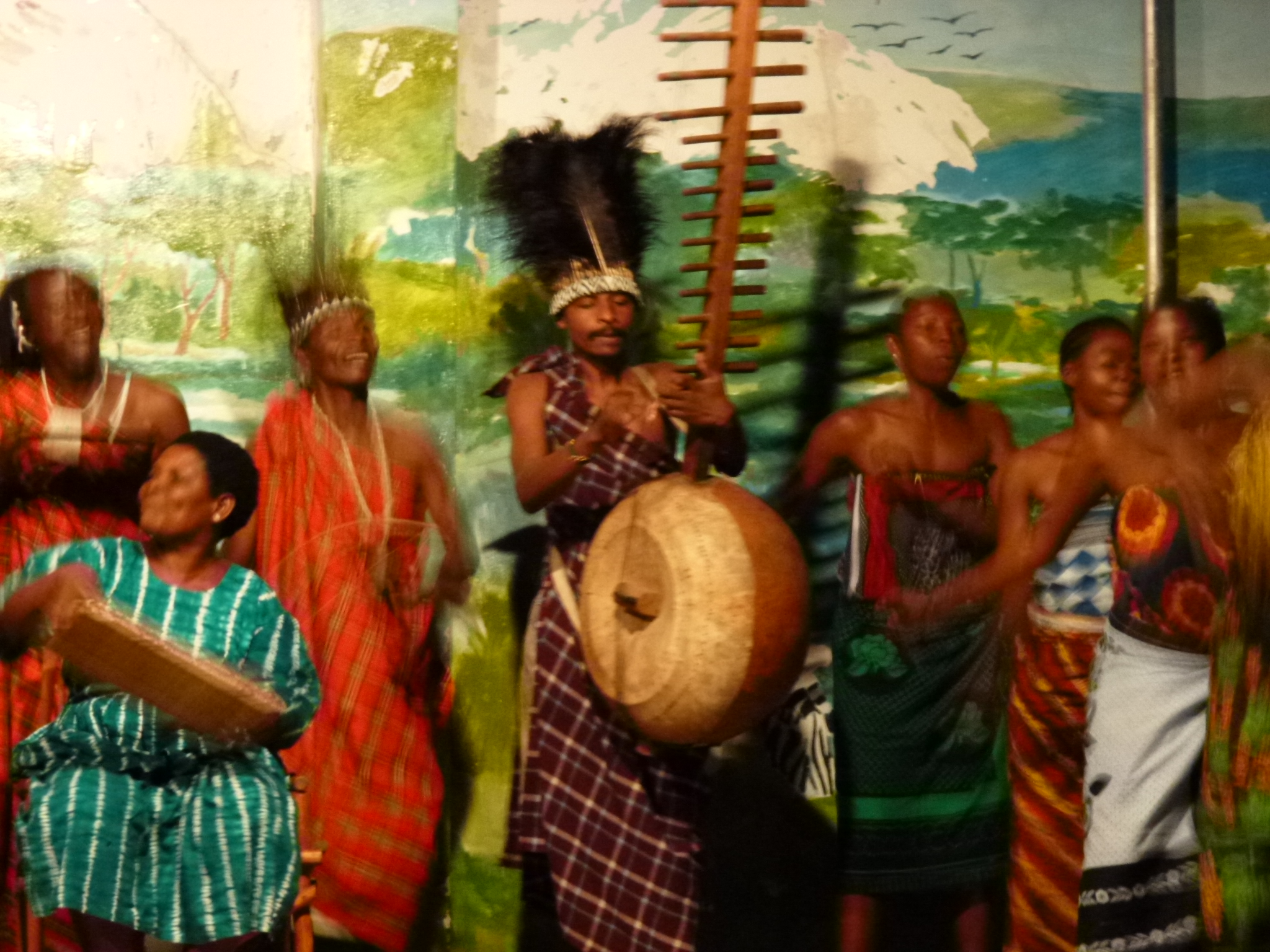
That night we went to a club called The Eagle’s Nest and the Zawose’s performed for real, with their unbridled passion and their authentic costumes made of goatskins and porcupine quills and headdresses of ostrich feathers. The women in particular are charismatic as they strut across the stage pounding furiously on drums squeezed between their legs, simultaneously dancing, banging, singing, laughing and making me wonder what I was doing over here working for an organization trying to empower Tanzanian women. The Zawose women are seriously empowered.

Check out the Zawoses on youtube, and if you want to book them for a gig (they would love to come to America!) you can get in touch with Victor at vlolinga@yahoo.com.

Siasa Kondo Sultani Biki

For two weeks I knew him as Biki, and when he wrote down his full name I asked why people call him only by his last. “I was born in 1967, very political. My first name given me by white people, so I use only on passport.”

Kondo is his father’s name; Sultani is his grandfather’s, and sometimes he uses that. “I’ll call you Sultan from now on,” I said. “You know what a Sultan is?”

“Like king?” He doesn’t smile much, but his eyes do.

He was born in Dar-es-Salaam and still lives there with his second wife, a tailor. His first wife, the mother of his eight-year-old daughter, died from a brain tumor. He commutes between Dar, Zanzibar and the Bagamoyo art market, where we met the first time I sat in on the artists’ afternoon English class. He was struggling and when I asked him the problem he just said: “Eyes.” It occurred to me that these guys have likely never had an eye exam much less anything corrective. I brought him an old pair of reading glasses the next day and they seemed to help.

Biki is 45, older than the other artists, and he teaches different techniques to many of them. He studied from three different teachers in Zanzibar and consequently has a unique mixture of styles. “I teach here, Dar-es-Salaam, Zanzibar. I teach white people and black people. I like to do both, to teach and to paint.” He signs his paintings “Prof. Biki.”

He has traveled to Malawi, Mozambique and Swaziland to try and sell his paintings, having luck only in Malawi. “My dream is to sell my paintings in Europe, and Asia. I need money for education of my daughter. She is in government school now, not good. But high school is much money.”

He has a fondness for beach scenes, with boats and fishermen and palm trees and colorful skies; it seems to fit with his placid and kind demeanor. That purple painting in his photograph is mine now.

Sadick Omary, Jimmy Chang Chuu, Aron Mkongwe, John Shoghollo

Down the road from the art market is a small shop where the power is out, not from some Tanzanian infrastructure issue as is often the case but because the bill hasn’t been paid. But the lads are unfazed. Their artwork lines the wall across the street, and they hang their t-shirts and clothing in the sun and work at tables in front of the store. Who needs power?

Besides, says Jimmy Chung Chuu, whose grandfather was Chinese: “The festival is coming in September, we will sell many t-shirts and paintings and then will pay the bill.”

These guys all came through the art college and stayed in Bagamoyo. “More tourists here than Dar,” says Jimmy. “Dar is too crowded, busy. Here we have our shop and people walk by, stop and look, come back, maybe buy. It is better here.”

They do it all: paintings, clothing and wonderful hand-made note cards. Sadick came up with a unique “I love Bagamoyo” logo and now you see his t-shirts all over town. He’s working on one for Tanzania, which should expand his reach.
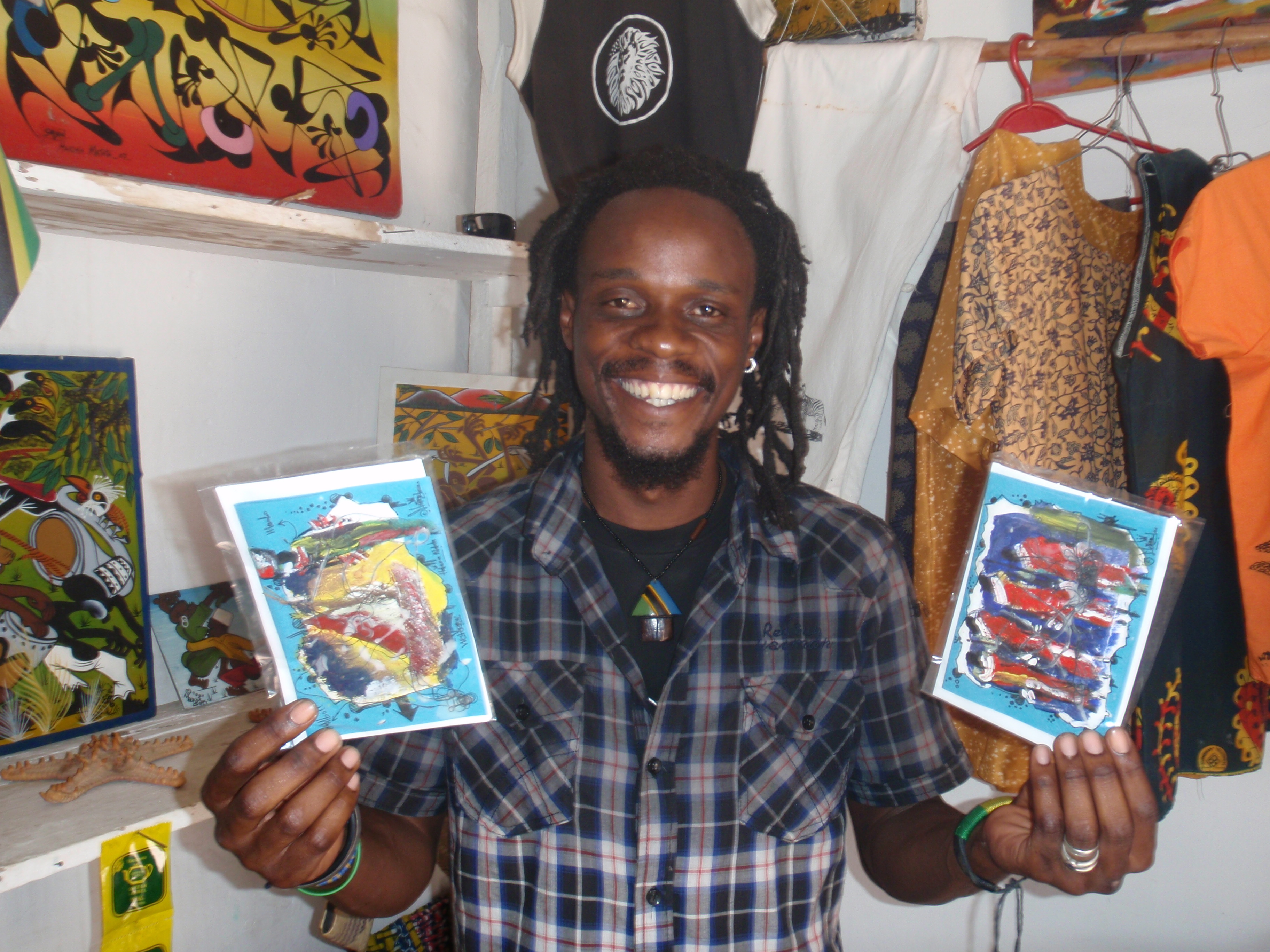
John Shoghollo was a teacher of the other three at the art college, and now seems to be kind of a partner in the store. He does Dali-esque paintings of elephants and tusks and hunters that reflect how he feels about the ivory trade and the senseless killing of elephants that still goes on. “You should do one of these with rhino,” I told him. And maybe throw in a few Maasai.

Saidi Mbungu 

Saidi is a product of the art culture in Bagamoyo, having attended the art college here, and after that taught carving and painting, but his calling at the moment is AMAP, a school that started out as the African Modern Art Program but is now educating younger kids in academics at a level most families have to pay for.

He is from Dar-es-Salaam and started his career as a cartoonist for a newspaper there, but came to Bagamoyo in 1999 for one year of schooling. A British benefactor invited him to the UK twice, and the second time he stayed in Wales for three months where he participated in a Festival of African Art.

But his dream was to have a place where young artists from 17 to 22 could work together and learn, and exhibit their work, the concept being that they would stay for three years and then leave to become teachers themselves. It worked well at first but they wanted to be paid and fed, “and I had nothing to give them, so they moved on.”

Over time he developed the idea for the African Modern Art Program, which has evolved into a school for 85 kids ages 4-10. They pay nothing. Saidi covers their supplies and uniforms and pays the teachers, mostly from donations. His wife, Pili, is a seamstress with a shop nearby and she donates 10% of her profits to AMAP. The school opened this year and already he has been able to send 45 kids on to primary school. The school is in a crumbling building with no electricity or plumbing. The walls are decaying rapidly and some young ROTC cadets from our volunteer team worked for two weeks patching them with concrete so they wouldn’t cave in and could be painted white to keep the room from being more dungeon than classroom. “It’s like building a vertical sidewalk,” one of them said. But the room is white now, and brighter, and soon will have the alphabet and numbers added to its perimeter.

Between raising money and carving, painting and cartooning, and teaching the kids art one day a week and older kids in the evening, Saidi has managed to finish a book that he hopes to get published so the proceeds can go to AMAP. It has nothing to do with either art or education. He writes – with great passion I can only assume from our conversations – about governmental corruption in east Africa, how the leaders care only about lining their own pockets and their big cars and houses.

“We have so much security with the police and the army and still people bring in cocaine and guns,” he says. “Why do you think that is? If we don’t get leaders who care about the people, in the future it will be ‘janga’ … disaster.” He’s trying to get some financial support to get the book translated from Swalihi to English, and then published.

Political corruption is a very common topic of conversation here, as elsewhere in Africa. They call Jakaya Mrisho Kikuete of Tanzania “The Flying President” because he jets around the world to this event and that and is never here. A few people from the government have been fired recently for corruption but that’s seen as token, and nothing really changes. The walls in Saidi’s school continue to crumble, and he continues to do everything he can to keep them upright and to raise money and keep the kids in class, three to a desk.

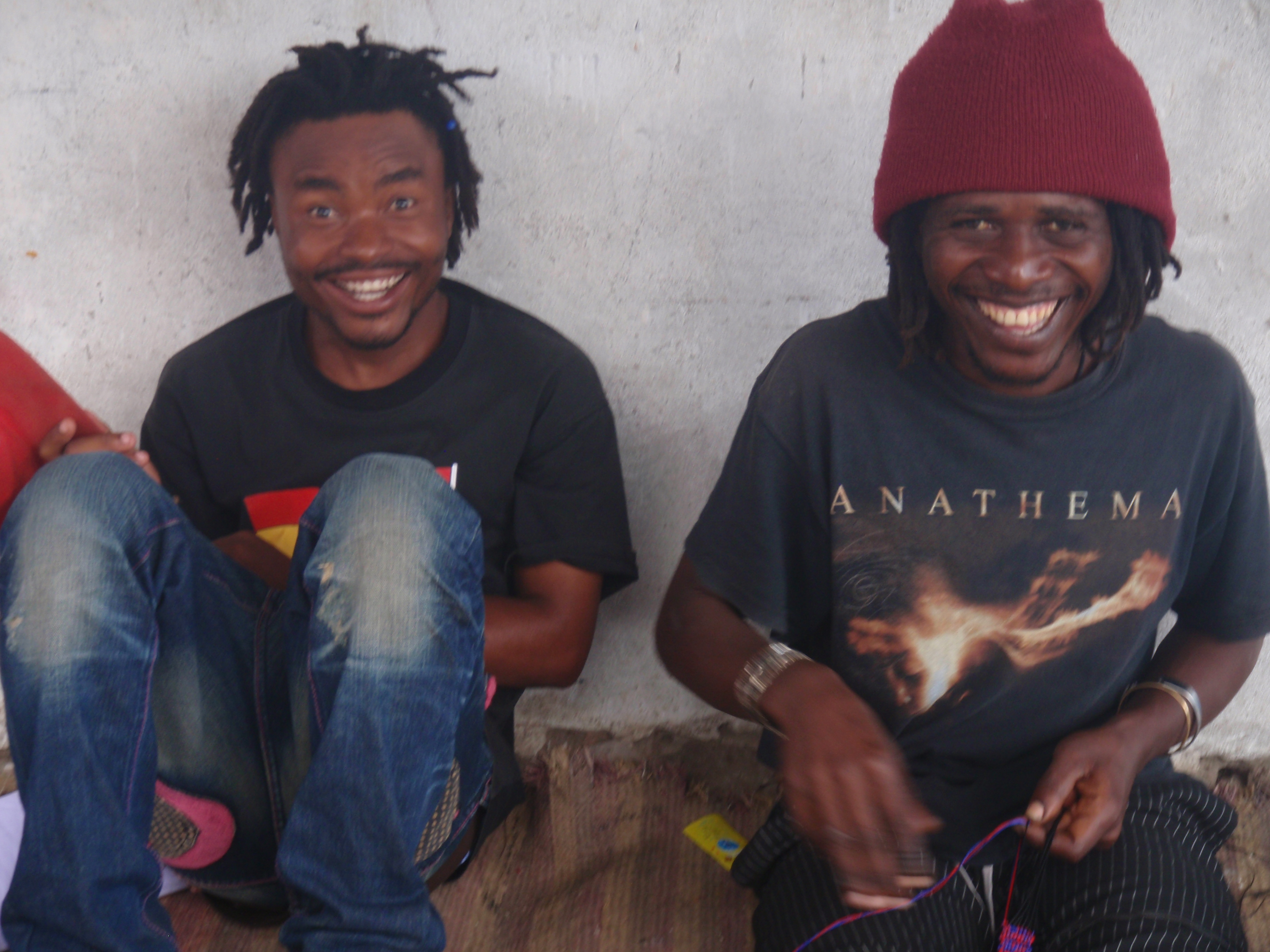
Below: Crazy Drummer and Nyolla
Categories: Uncategorized

Zanzibar

Even if you don’t know much about Zanzibar the Arabian rhythm of the syllables paints the picture for you. Pirates and prostitutes, tourists and thieves; bargaining and bribery at the waterfront by day, furtive transactions in the shadows of the night.

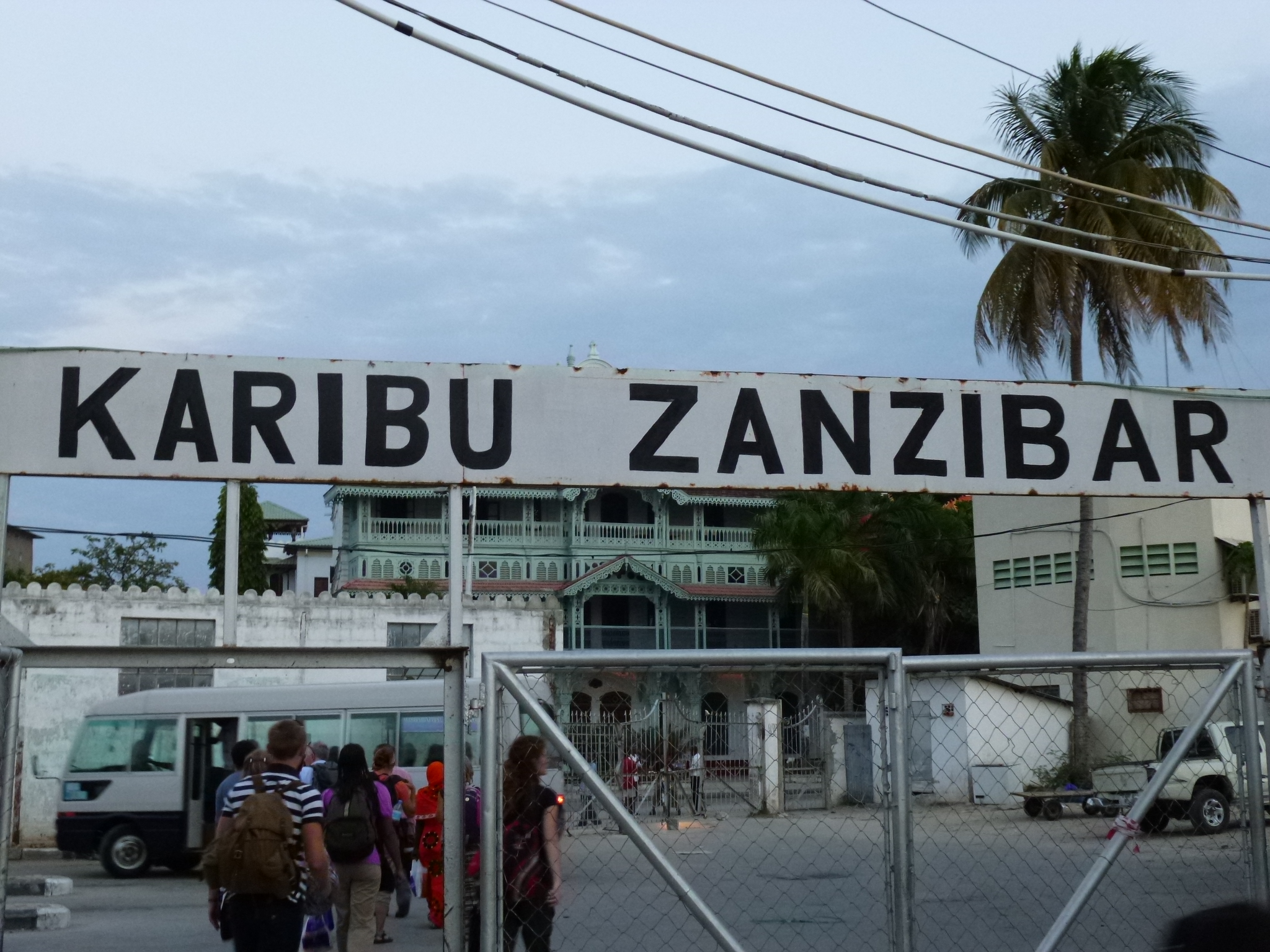
Thirteen of the Cross-Cultural Solutions volunteers entrusted our first weekend to an entrepreneur named Kennedy and headed for Zanzibar on a Friday afternoon. The trip included a two-hour ferry ride from Dar-es-Salaam, a small leap of faith as ten days earlier one of the Zanzibar ferries rolled over in heavy seas and an unspecified number of people drowned, by some accounts more than 150. But with Kennedy’s assurance we took a bus to Dar and had an uneventful shuttle across this piece of the Indian Ocean to Stone Town, the heartbeat of Zanzibar.

Zanzibar is from Arabic and means “Coast of Blacks”. It is really an archipelago consisting of 50 islands but only two are inhabited: Unguja, which is universally known as Zanzibar, and Pemba. It was discovered by Arab and Portuguese traders and was a Portuguese property until 1698. In the 18th and 19th centuries it was Omani, and then Britain claimed it as a protectorate.

After Britain offered independence in 1963 an Arab minority took control, a remnant of a former Omani regime. A year later 700 African revolutionaries overthrew the Sultan of Zanzibar and his Arab government, with estimates of the death toll ranging from several hundred to 20,000. The new administration was feared by the west to be leaning to Communism but that turned out not to be the case, and later in 1964 Zanzibar and Tanganyika united to form what is now Tanzania, although Zanzibar remains semi-autonomous with its own president. One million people currently live on the two islands, and the principal industries are tourism, and the export of spices and raffia palm trees.

Here are three useless but fun pieces of Zanzibari trivia. Zanzibar was the birthplace of Swahili and is considered home to the purest form of the language. In 1973 it became the first place in Africa to introduce color television. And the great Freddie Mercury, former lead singer of Queen, was born in Stone Town as Farrokh Bulsara.

I’ve been reading a book about Zanzibar called The Last Slave Market”. In the late 1800s, after slavery had been eliminated from the west coast of Africa, the practice still flourished on the east coast because of demand from the Arab countries, and Zanzibar was its epicenter. Natives were captured by slavers and ivory traders in Africa’s interior, brought in chains to the coast and taken by “dhow” to Stone Town. Those that died en route or were too sick or weak to fetch a decent price were thrown overboard in the harbor to avoid the tariff; the bodies washed up on the shore to be eaten by the dogs and the crabs.

We checked in to the Swahili Beach Resort, had a good dinner and retired to prepare for an early wake-up call to swim with dolphins. Kennedy had everything well coordinated and we met guys on the beach who had life vests and snorkelling gear. Eleven of us got into two rickety boats with 20-year-old motors and non-English speaking “captains” and headed out to sea, where the dolphins were thought to be. Our driver had a phone in a baggie and he was on it constantly, asking his buddies if there was a sighting. After 30 minutes or so we came across some dolphins and were told to get our gear on. Our guy positioned the boat and yelled, “go, go, go … look down, look down!” I was the first one in the water and never saw anything but blackness, but I did see ten other boats that I was quite sure didn’t see me.

It was hysterical. After getting in and out of the boat several times we did the dolphin dance with the other boats again, looking for fins amid the swells, and five minutes later the captain tapped me on the shoulder and said: “We go snorkel now.” Swimming with the dolphins was officially over.

Before we left the area we pulled a couple from Denmark out of the water; the engine on their boat had failed and they needed a ride back. The woman was feeling poorly and spent the remainder of the trip leaning over the side, and a few of our folks were in a similar condition; these were small boats and the sea was choppy.

The snorkelling lasted approximately 90 seconds because there was nothing to see; we opted for breakfast and spent the rest of the day reading or sleeping by the pool. The TVs in the room didn’t work well but one in the bar did, and I checked in throughout the day to catch whatever Olympic coverage was available. It was a very relaxing day, and gave us all a chance to get to know each other outside of our regimented volunteer environment in Bagamoyo.

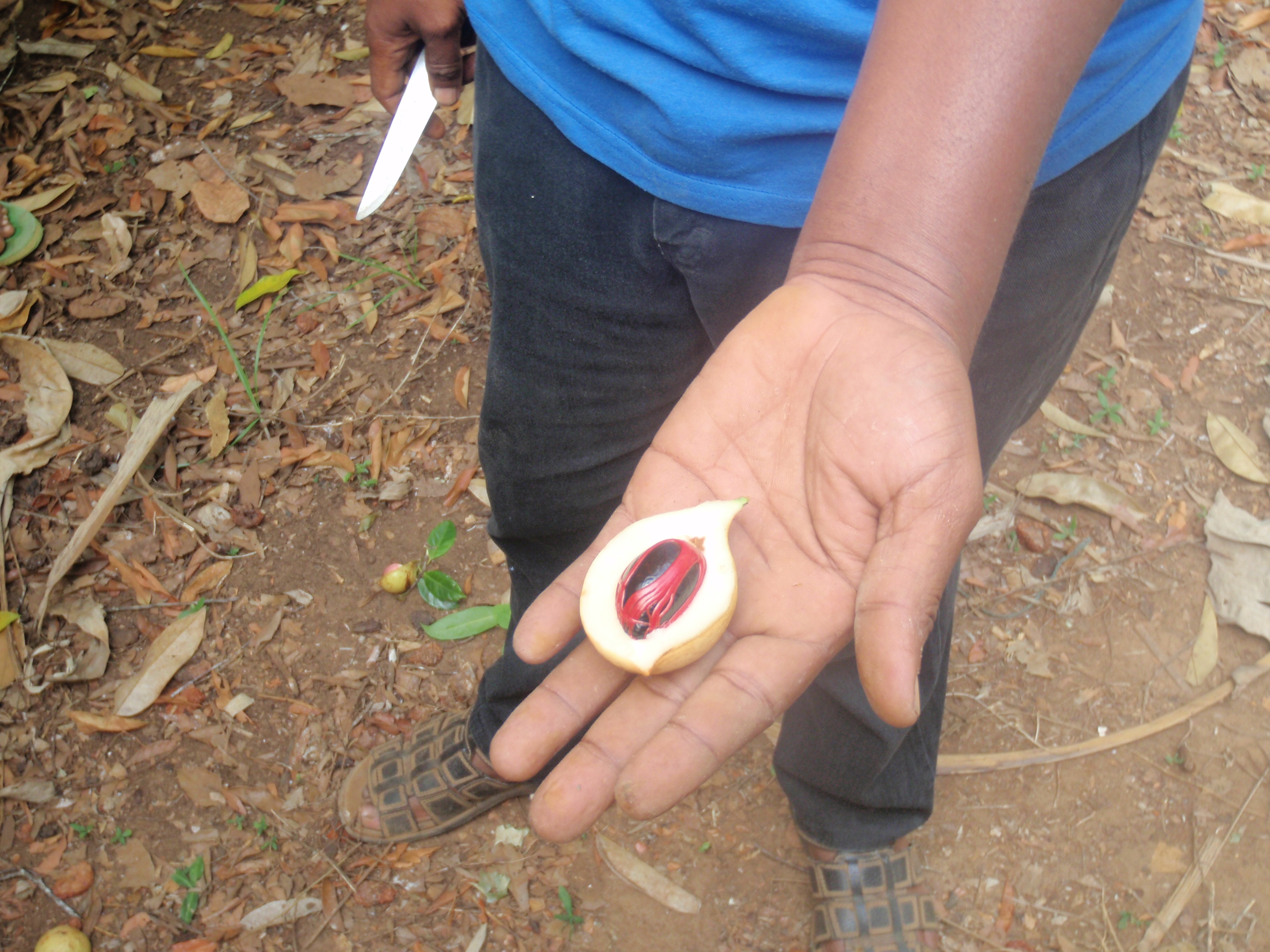
On Sunday, before catching the ferry back to Dar-es-Salaam, we visited a spice plantation and had an historical tour of Stone Town. I wasn’t especially looking forward to the former but it was actually quite interesting. A delightful man who called himself “Mr. Spice” gave us the tour, and in an area that couldn’t have been more than half an acre we saw papaya and mango trees, lemon grass, aloe plants, jack fruit, white and dark cocoa, cardamom, nutmeg (pictured), clove, taro root, turmeric, star fruit, coconut (the yellow for drinking, the brown for eating), cassava, allspice, cinnamon, bread fruit, pineapple, anato dye, mbilimbi (substituted here for lemons and limes), peppercorn, a coffee tree, ginger, henna, a vanilla vine and probably a few I missed. They served us a great lunch and sold us spices. I bought a bar of clove soap and have smelled like a Christmas ham ever since.
During the tour, two or three of the young guys working on the farm walked with us and made things out of leaves: rings and bracelets and an origami-like frog for the ladies, a necktie and glasses for the guys. They presented these to us while holding a cone-shaped palm-frond receptacle already primed with a 10,000 shilling note ($6.25), and said: “Now tip please”. No problem, my friend, it was well worth it.

Our time in Stone Town was brief and predictable. We took a walking tour of some of the historical sites, starting with an Anglican church created in 1874 that was the primary slave market before that. In the basement are two cramped rooms, where an unfathomable number of men, women and children were jammed awaiting their sale to Persian traders. The rooms – concrete shelves, really – still feature some of the original chains.

Outside the church is a creepy monument to honor the slaves, statues of five black people in a rectangular concrete hole, four of them in chains and the fifth representing the slave designated to keep the others in line.

We took a break at a hotel called The Africa House, a beautiful old building that had been a club for British gentlemen in the latter half of the 19th century. Two Masai warriors working in the hotel were chatting off to the side and looking like two bored hotel workers anywhere, except for the garb. I had a beer on the patio overlooking the Caribbean-blue water, and all I could think about was the bodies washing up on the shore 150 years earlier.

Even though it was Sunday, and Ramadan, the order of the day in Zanzibar was commerce. The market for locals on the old town side of the main road was doing brisk business. We glanced in the general direction of the fish market, with wicker baskets full of Spanish mackerel, goatfish, snappers and parrotfish ripening in the sun, but no one had the appetite to venture in. I walked out of the sunlight and into the chicken market, and immediately wished I hadn’t; it was filthy, with chicken droppings on the floor and flies feasting on piles of gizzards and chicken parts. I snapped a quick picture, said “Hujambo” weakly to some angry vendors and hustled out.

We walked a long way through the narrow, twisting streets of Stone Town, and our guide pointed out the variety in the architecture. There are very obvious Arabic and Indian features in the windows and doors, with some African and western influences mixed in. The doors in particular were once great status symbols and are consequently very ornate, some with spikes protruding in an Indian style that was meant to protect against elephants.

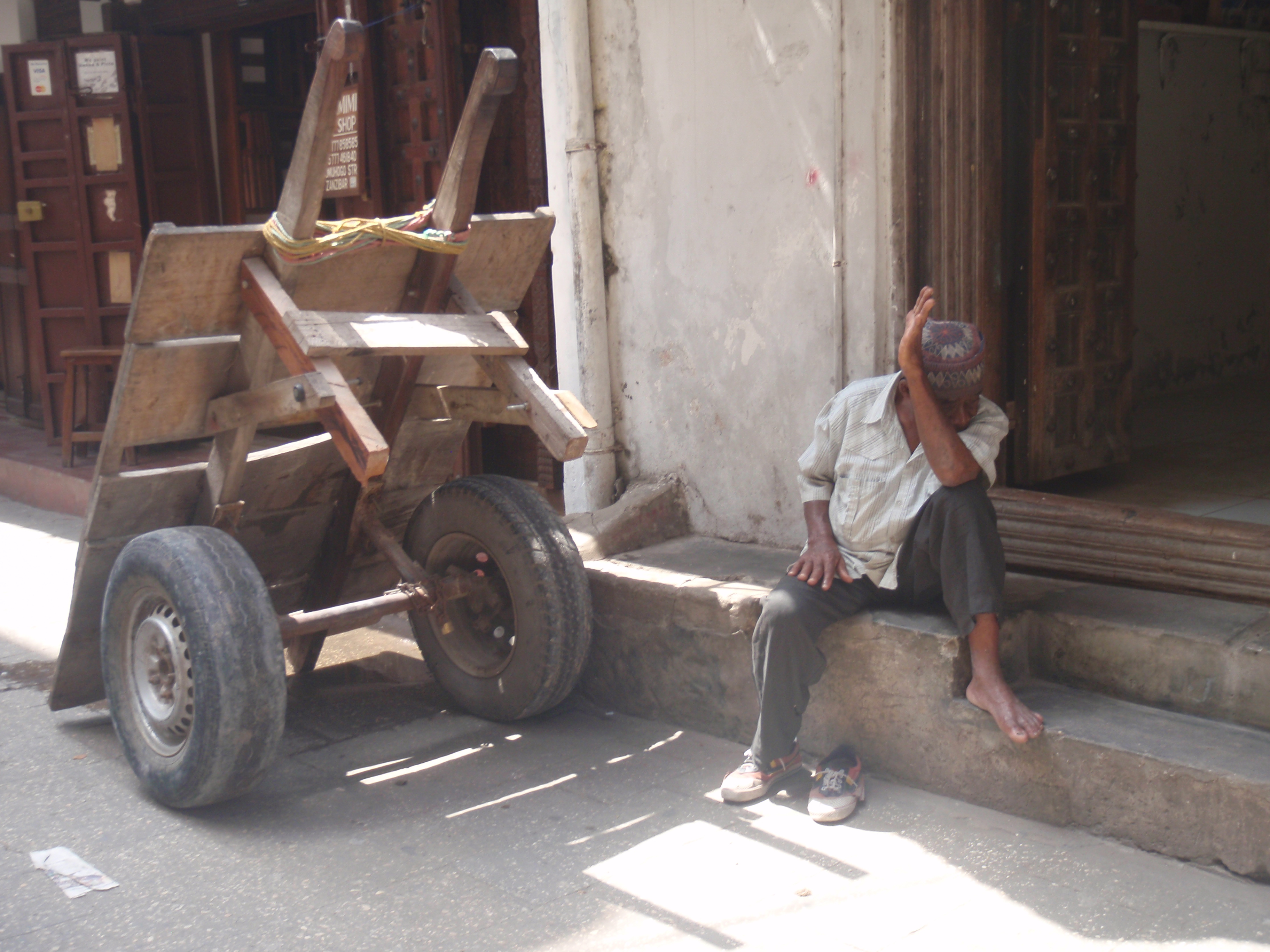
You keep your head on a swivel in Zanzibar. If there are any regulations regarding traffic in this labyrinth of alleyways, they are unenforced. There is no way motorbikes should be allowed in the narrow streets but they are, and they come at you from all directions, as do donkey carts and push carts and bicycles laden with enormous piles of wood. An extremely old man struggled pushing a bicycle with three huge sacks of goods somehow attached. As he turned a corner he stalled going up a slight incline, and I walked over to give him a push. He brushed me away icily, executed a three-point U-turn, and slowly disappeared back down the street he had just made a monumental effort to traverse.

As we boarded the ferry and pulled away from Stone Town I knew I had not seen the real Zanzibar, the one conjured up by the name, and I felt a desire to return and do it differently. Ramadan ends on Friday the 17th and the fasting is over and the bars reopen and the locals dress up in their finest clothes and rejoice. That could be a memorable weekend on the island of spices and slaves.

Categories: Uncategorized

Soweto Revisited

If you read the last post you’ll remember my visit to Soweto and the Hector Peterson museum, which stands as a tribute to all who died in the Soweto uprisings that began in June, 1976, and culminated with the release from prison of Nelson Mandela and the end of Apartheid. I didn’t expect to revisit the subject, but on my final night in South Africa I met an extraordinary guy and had to share his story. There is nothing like a first-person account to give you perspective.
On that night I attended the Lesedi Cultural Experience, an hour or so outside of Johannesburg. They’ve recreated villages from five tribes, including the Zulu and the Xhosa; they have an excellent 20-minute video about the history of South Africa and the tribes, and a dance and drum show; and they offer dinner if you’re interested.

It was touristy but fun, and informative about the differences among the tribes. The men of the Pedi tribe, for example, wear kilts. Back in warring times the Pedi were defeated by the British because they thought the Scottish highlanders on the front line were women, and refused to fight them. They now wear the kilts themselves, as a reminder of the trickery.

My guide for the evening was Emmanuel Ramafola. When I mentioned to him that I had been to Soweto the previous day he asked if I’d visited the Hector Peterson museum but made no further comment. A bit later I asked where he was from. “I’m from Soweto,” he said. “I was there the day Hector Peterson was killed.”

Emmanuel was 14 at the time, and was part of the group of students protesting. I wanted to know if the protest was really all about language.

“It was 100% about language,” he said. “The government had done many things to oppress us, but demanding that Afrikaans be the language of our learning was the final straw. After years of it being illegal we were finally able to learn in English. Afrikaans was a subject we had to take, but we all struggled with it. And now we were supposed to learn history, mathematics and everything else in this language?

“It was their attempt to keep us down, keep us ignorant so we would only be able to do the will of our masters.” So a huge protest march was scheduled for June 16, 1976.

“Somehow, the police found out what was going to happen, and they gathered in a church,” he told me. ‘But they didn’t expect there would be 25,000 of us and they were scared. They came out and ordered us to leave, and they were accustomed to black people doing whatever white people told them to do. But we didn’t move, and that made them more scared. So they sent their dogs to attack us, but we killed the dogs with rocks and sticks. They saw their dogs were dead, and that’s when they started shooting.”

Hector Peterson was the first to die; there would be 61 others by day’s end. “That day was the beginning of the end of Apartheid,” he said.

Emmanuel doesn’t struggle with Afrikaans anymore. There are nine black languages in South Africa and two white languages, and he speaks, reads and writes them all.

Categories: Uncategorized

Victoria Falls, Kruger National Park, Johannesburg


After two days in Zimbabwe, at Victoria Falls, I was very grateful that I had taken some last-minute advice and added it to the itinerary. The Falls themselves are worthy of all the superlatives, and the total experience was just a lot of fun.

My hotel had a casino attached to it, always a good sign. It was also much warmer here then in South Africa so had a beer at the poolside bar, enjoyed the sun and then headed for a sunset cruise on the Zambezi River. On the bus over I met a couple from Ottawa, Ted and Dorothy Gordon, and we had a wonderful, relaxing time on the cruise checking out the scenery and discussing the political differences in our countries. I was expecting we’d get close to the Falls on this cruise but it was more about the wildlife; we saw some very large crocs and a number of hippos.

That evening I played a little blackjack and met a guy vacationing from Australia, Tim Blakeley. We had a good time at the table and made plans to do a steam train ride to the Falls the next evening. Connecting with the Gordons and Tim just reinforced that the best part of this trip is meeting other travelers and sharing experiences. It was a really good day.

The next morning I walked the mile or so to the Falls, foolishly rented a raincoat for $5 (the currency in Zimbabwe is the American dollar!) and then walked the paths to the various overlook points. It was magnificent, although the further you go the less you can see because the mist created by the Falls is so thick. There is a statue of David Livingstone, the British explorer and missionary who was the first European to see Victoria Falls in 1856, and it’s fun to think about him hacking his way through the jungle, hearing it first, maybe seeing some mist through the trees, and finally breaking through to this amazing sight. I’m sure he was a Scottish gentleman and didn’t say what I would have said, but I’d love to hear the recording of whatever it was. The natives called it Mosi-oa-tunya … The Smoke that Thunders. Livingstone renamed it after his Queen.

He was a bit wacky and went quite mad apparently, but he was relentless in his search for the source of the Nile and in conveying his anti-slavery message. He spent quite a bit of time on the east coast of Africa, where I am headed tomorrow and where slavery was rampant in those days. He was very sick with malaria his final years, after being found by Mr. H. Stanley, who I believe was a newspaper reporter sent to try and find him. There is a drink they serve in the bar at the historic Victoria Falls Hotel called the “I Presume”. Or, if you happen to work for Apple, the iPresume.

The train ride that evening was touristy, but fun. The steam engine was made in England in 1952 but some of the cars date back over 100 years, and the staff in their white uniforms and pith helmets give it a nice authentic feel. You don’t have to go far to get to the bridge over the river, which affords some beautiful shots of the Falls in one direction and a lovely gorge in the other. After actually crossing the border into Zambia you get off the train at the far end of the bridge and walk around for 45 minutes with a glass of champagne, fending off the vendors and watching the bungee jumpers, waiting for the sun to set.

On the slow ride back I was hanging out the window at dusk thinking, man, this place looks just like the Africa I’ve seen in movies. Right on cue, in the trees about 50 yards away, two elephants wandered into view.

*     *     *     *     *     *     *     *     *     *     *     *

Two days later I was in a van with five people from Germany and a guide, Fritz, who spoke German and did a great job balancing languages; thanks for the effort, Fritz. We were on the way to Kruger National Park in northeast South Africa, named after a former South African president Paul Kruger, who lobbied to make this a protected area because the large animals were being killed in unfortunate numbers.

The park is 250 miles long and averages 35 wide, but it is soon to get much bigger as it expands officially into Mozambique to the east and Zimbabwe to the north. It took about five hours to get to the entrance so we had a couple of hours in the park before checking into the hotel. We saw a couple of elephants and giraffes, many different kind of antelope, some hippos lying in the sun. I’d seen quite a bit of wildlife by then, but I got a big kick out of the reaction of the others in the van.

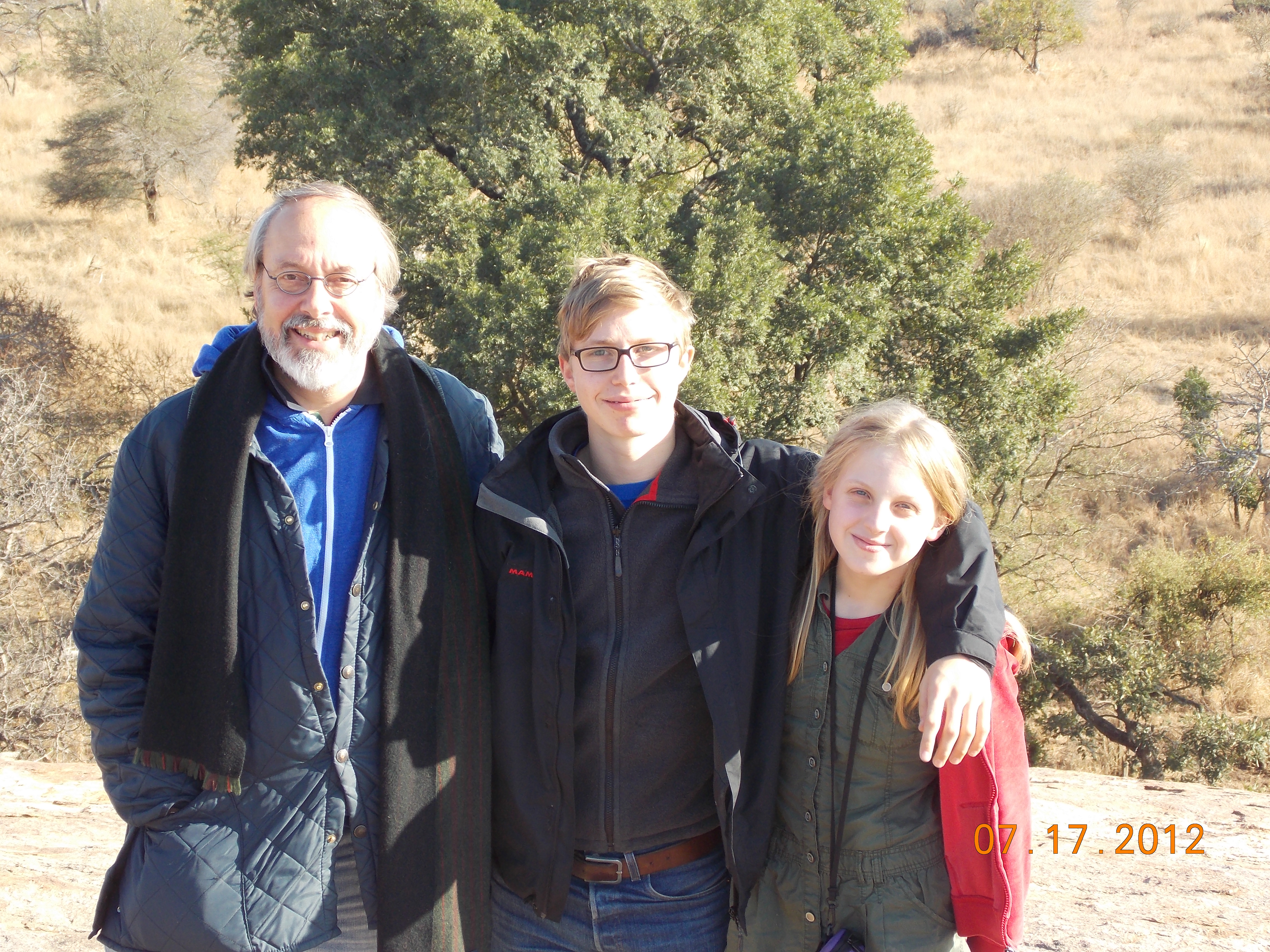
At dinner that night I got to know a family of three from Greifswald, near the Baltic Sea in northeast Germany: father Michael North and his son Chris, 16, and daughter Connie, 13 (I think). Michael is a history professor at the University of Greifswald, and is just this wonderful, interesting man who has traveled and lectured and taught extensively, including a year in Santa Barbara, California. He knows academic people all over the world, so not only am I hoping to drive up and see him and his family in northern Germany when I am in Europe, but because of Michael I’ll have contacts in India, Vietnam and other places I intend to visit. And Chris and Connie are terrific kids; he is a serous soccer player and wants to get a scholarship to play collegiately in the U.S., so maybe I can help spread around his recruiting DVD. When you travel it’s just amazing who you meet, how your interests intersect, how quickly you can develop a rapport.

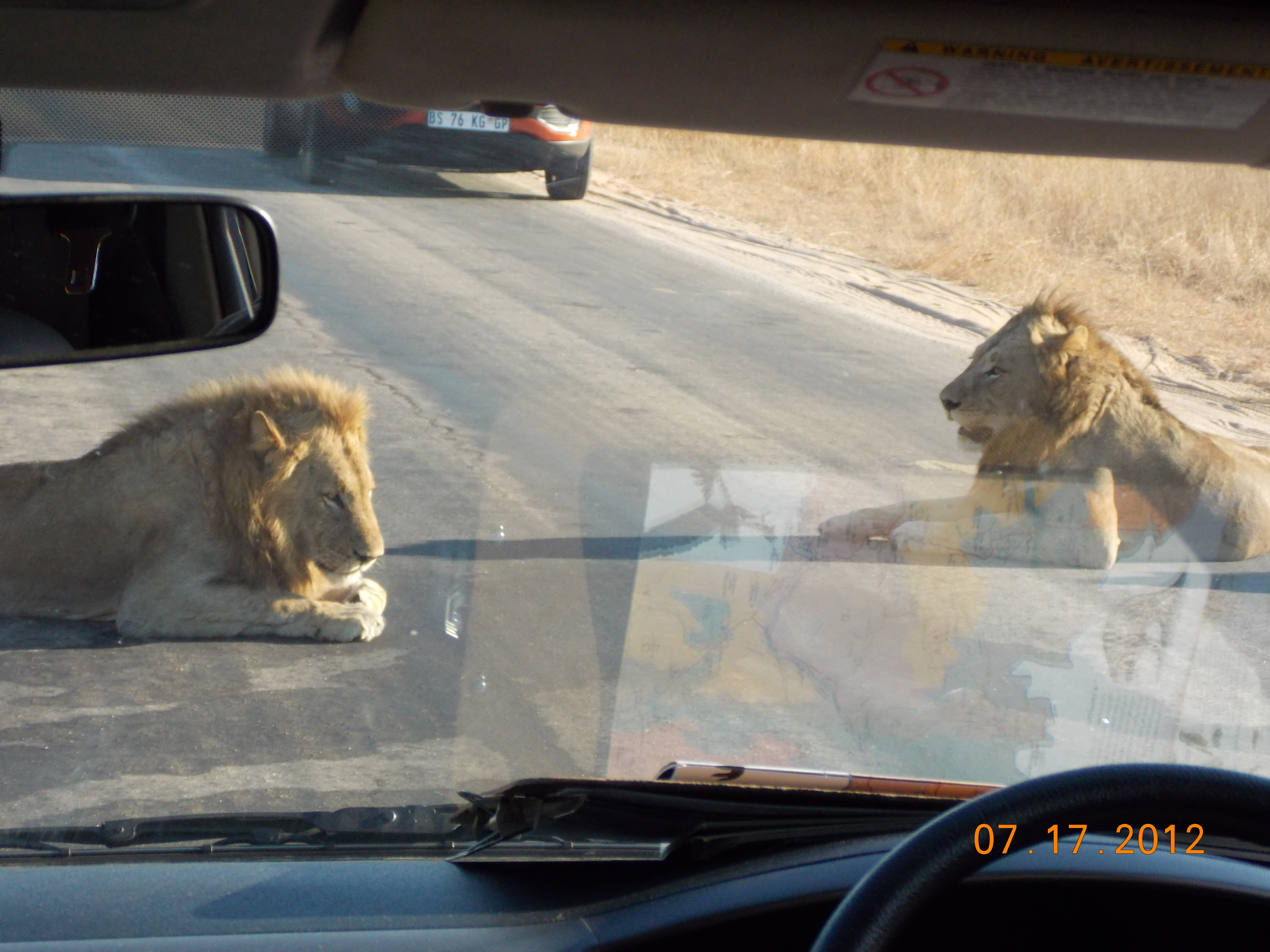
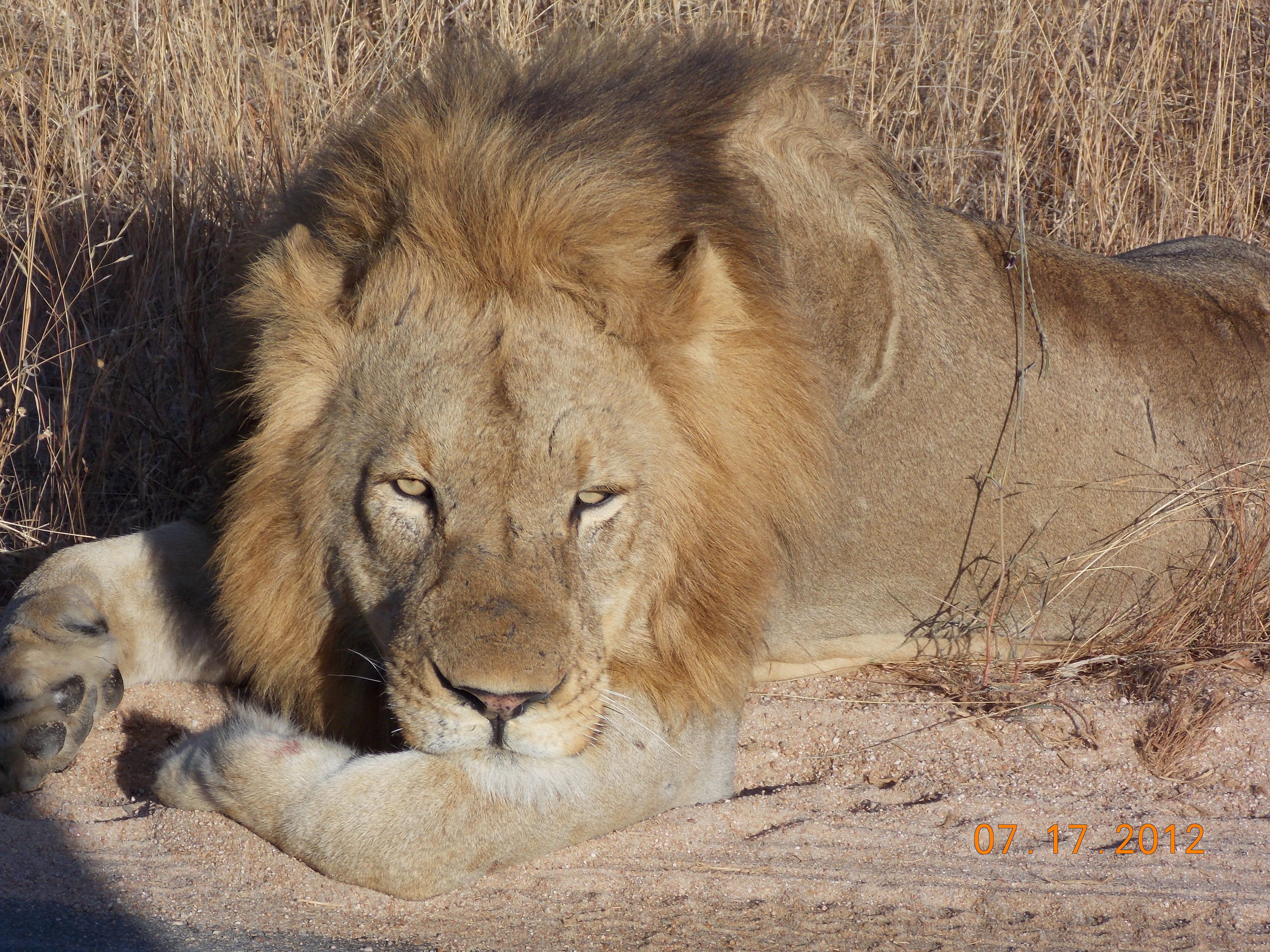
We spent the next full day in Kruger, and the highlight was coming across three young male lions, just lying in the street. In Tanzania I’d seen lions up close, but all females. Of course an armada of vehicles was there as soon as word spread, jockeying for position, but we got a great look and some good pictures.

The other two who drove uo with us – Katya and Anka, dental assistants from Rendsburg, also in the north of Germany — had taken another vehicle and had seen leopards and cheetahs as well, and they were very animated and excited that night at dinner. In German, of course, but I got the gist.

The drive back to Jo’burg was much different than the drive up, more scenic, through lots of forest and farmlands, rolling hills and mountains. My favorite stop was an old mining town called Pilgrim’s Rest, which developed after gold was discovered there in 1872 by a guy called Wheelbarrow Petterson. Ol’ Wheelbarrow had ditched his donkey after getting kicked and just wheeled his way from Cape Town to these mountains north of Jo’burg, maybe 2500 miles (a very loose guess), and he decided that was where this pilgrim was going to rest. The story and the town remind you of old mining towns and tales in the U.S.

*   *   *   *   *   *   *   *   *   *

Back in Johannesburg, it was appropriate that on the day after Nelson Mandela’s 94th birthday I see several places where he lived and worked, visit Soweto, tour the Apartheid Museum and see other sites in the Johannesburg area related to the country’s history.

Soweto (SOuth WEst TOwnship) is enormous, sprawling. I was told while in Cape Town that it had 2.5 million residents, but my guide today, Klaus, said it was closer to 5 million. Either way, more people live there than in Johannesburg, which is primarily a business district. There are many very nice neighborhoods in Soweto, and there is a lot of commerce. There are also “squatter camps” along the lines of what I saw in the Cape Town townships, but neither as extensive nor as congested.

But Soweto, more than anything, is significant for the uprisings that led to the end of Apartheid and the release of Nelson Mandela. Apartheid, which had been in effect since 1904 and made law in 1948, ended because of violence that began on June 16, 1976, when 62 people were killed by police. Students had been protesting being forced to learn in Afrikaans, which was considered the language of their oppressors. They wanted to learn in English, but for years had been jailed, or their parents had been jailed, for encouraging it. (In 1984 English was introduced into the curriculum in the public schools.)

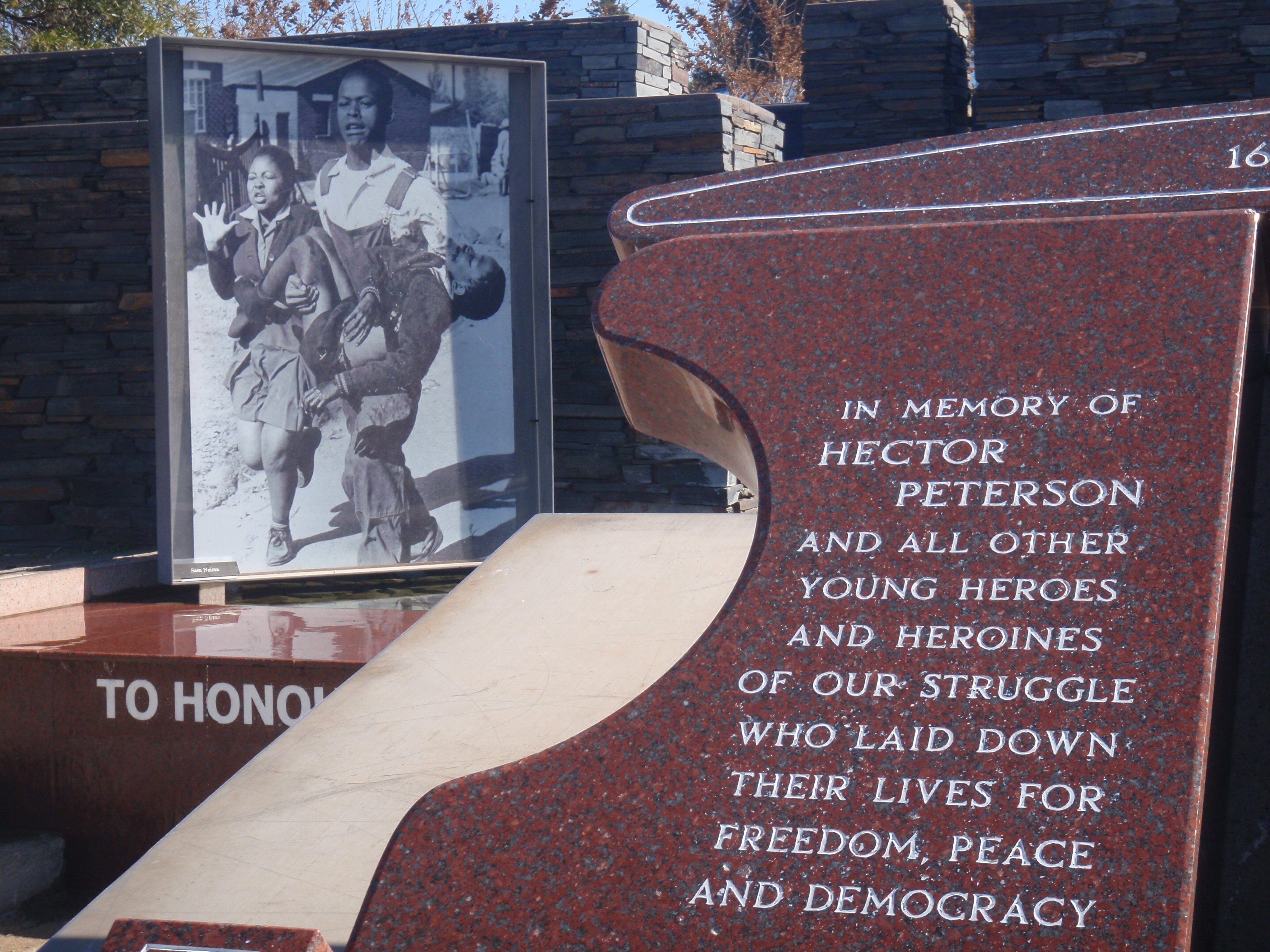
On that fateful day in 1976 a shy young student named Hector Pieterson was the first killed, by a stray bullet, and he is now a symbol of the uprising with a museum dedicated to him and others who died. Outside there is a chilling photograph of Hector in the arms of a man who became a reluctant hero, and Hector’s hysterical sister. The schools were ultimately closed until January, 1977, and there were one million students unaccounted for who had been in school the previous January. No one seems sure where they went.

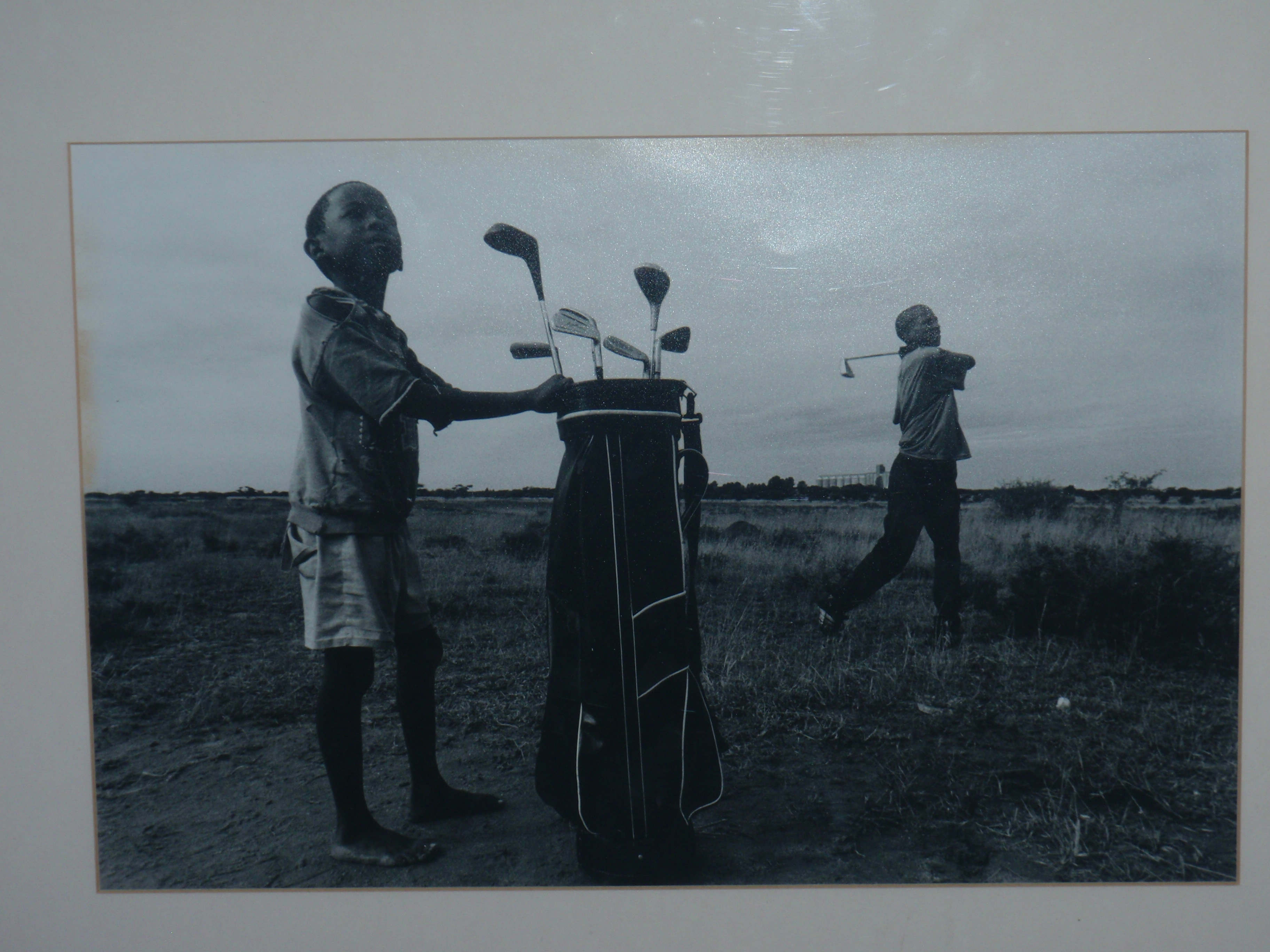
The violence went on for years, with thousands killed, but ultimately it was violence that focused the world’s attention and turned the tide against Apartheid. We visited the Regina Mundi Church, where bullet holes remain in the ceiling and in old plastic windows that have been saved. The church has a photographic exhibit of the Soweto uprising that is very powerful and disturbing. Among the photos I found an extraordinary picture of two young black kids playing golf in 1998 – ironically just months after the formation of The First Tee was announced.

The street on which Hector died is Vilakazi Street, which Klaus called “the most famous street in the world” because it was the home of two future winners of the Nobel Peace Prize: Nelson Mandela and Desmond Tutu. Mandela’s house was 25 yards away from the family restaurant, which still exists.

On the way back to Johannesburg Klaus took me to the Apartheid Museum. Your admission ticket randomly identifies you as either European or non-European, and each has different entrances and different opening experiences. You are immediately bombarded by pictures of signs in English and Afrikaans: “black men only”, “European women only”, etc. The highlight, for me, was the various video clips. To see Stephen Biko on tape was stirring, as he balanced his messages of black pride and pacifism. Biko was jailed, beaten and (it is assumed) starved, and he died incarcerated at age 28. At the same time, to watch tape of white officials justifying Apartheid to purely white audiences was nauseating. It’s a great museum, emotional and imaginatively configured, and it was a fitting conclusion to my South African education.

*   *   *   *   *   *   *

I leave tomorrow morning for a five-week volunteer stint in Bagamoyo, Tanzania. I don’t know how often I’ll be posting on the blog during that period, given the necessary restrictions placed on the volunteers for reporting and photos, and since I’m not sure about internet availability. But if there are interesting stories I can share I will do so, technology permitting.

Thank you for checking in!


Categories: Uncategorized

South Africa 2: The Garden Route

I headed east out of Cape Town along the “Garden Route” with my companion for the next five days, Mr. Peter Joseph, a tour guide and historian of note and, as it turns out, an avid golfer. Since part of the reason I came here was to absorb as much information and history about South Africa as possible, I could not have had a better person with whom to discover this part of the country.

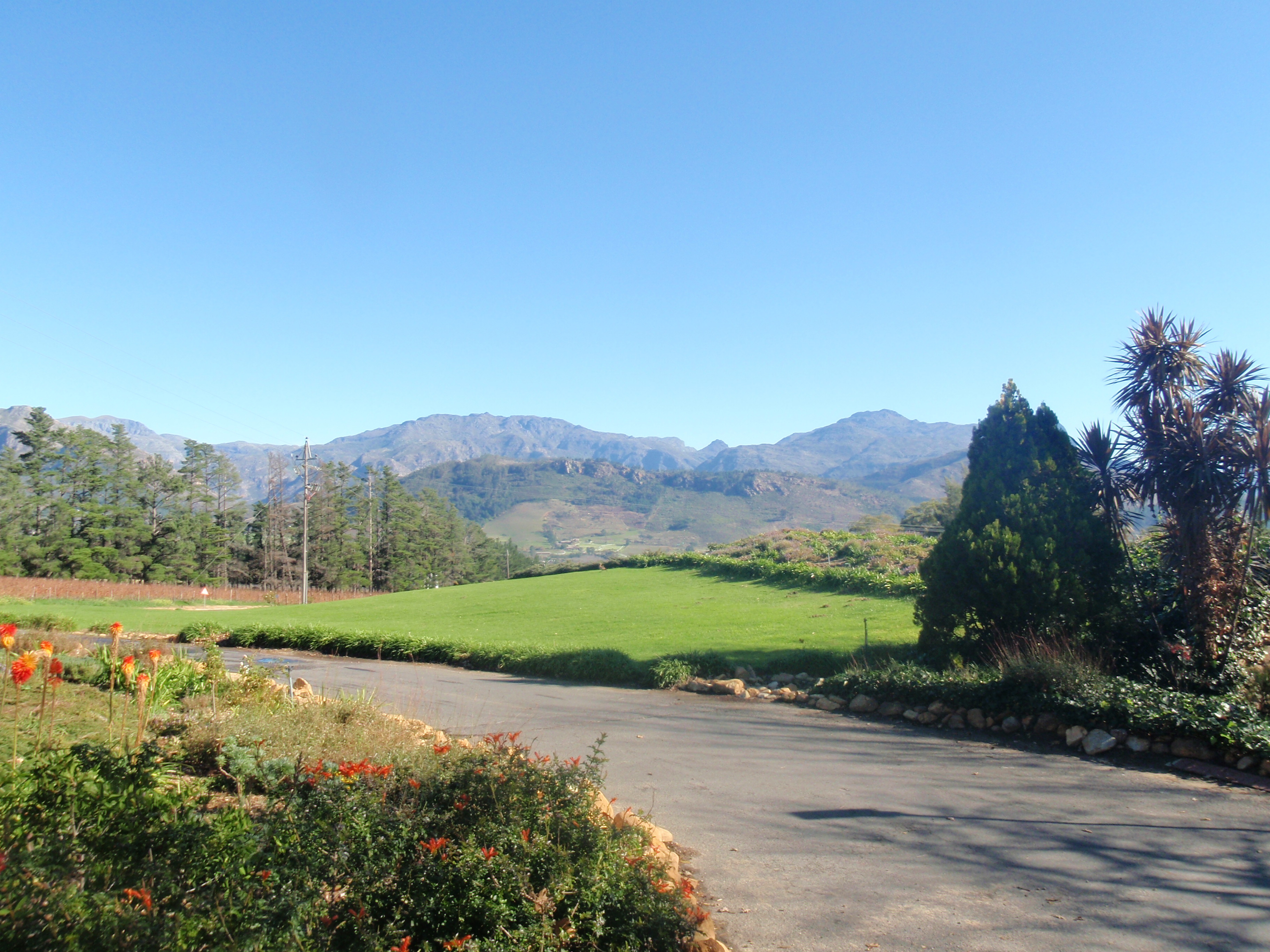
We were going back through wine country and decided to look for Ernie Els’ winery, which we found at the end of a long road that also led to other estates. The fields of dormant grapes went on as far as we could see. Unfortunately the winery was closed on Sunday, but we walked around the place and everything reeked of class, not surprising considering the wines that come out of here are considered of the highest quality. Well done, Ernie.

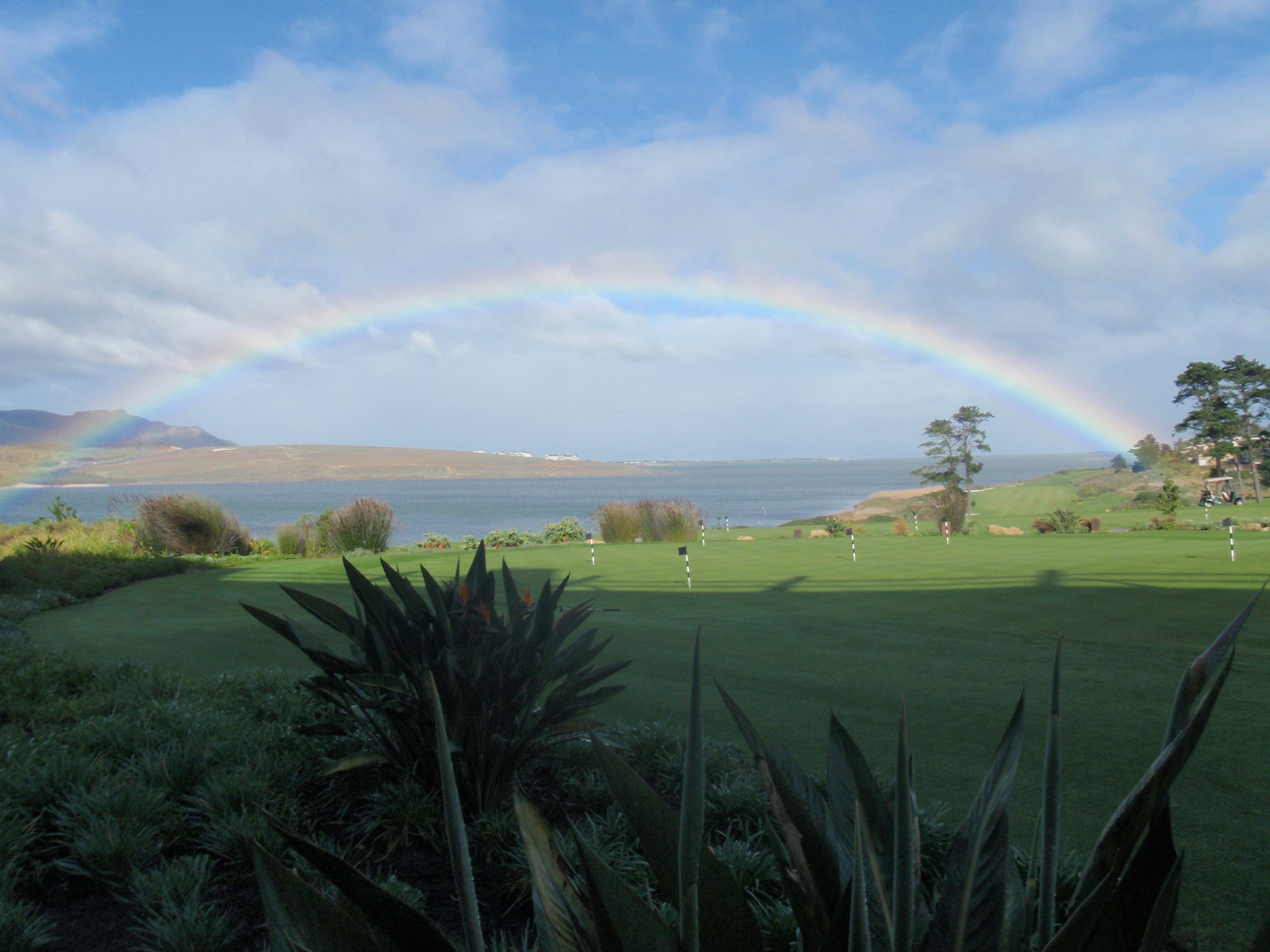
We had lunch that day at a golf course and resort called Arabella; it’s ranked the #4 course in all of South Africa. We saw a beautifully formed rainbow over the water beyond the putting green. In the afternoon we stopped at a seaside town called Hermanus to look for whales, but didn’t see any.

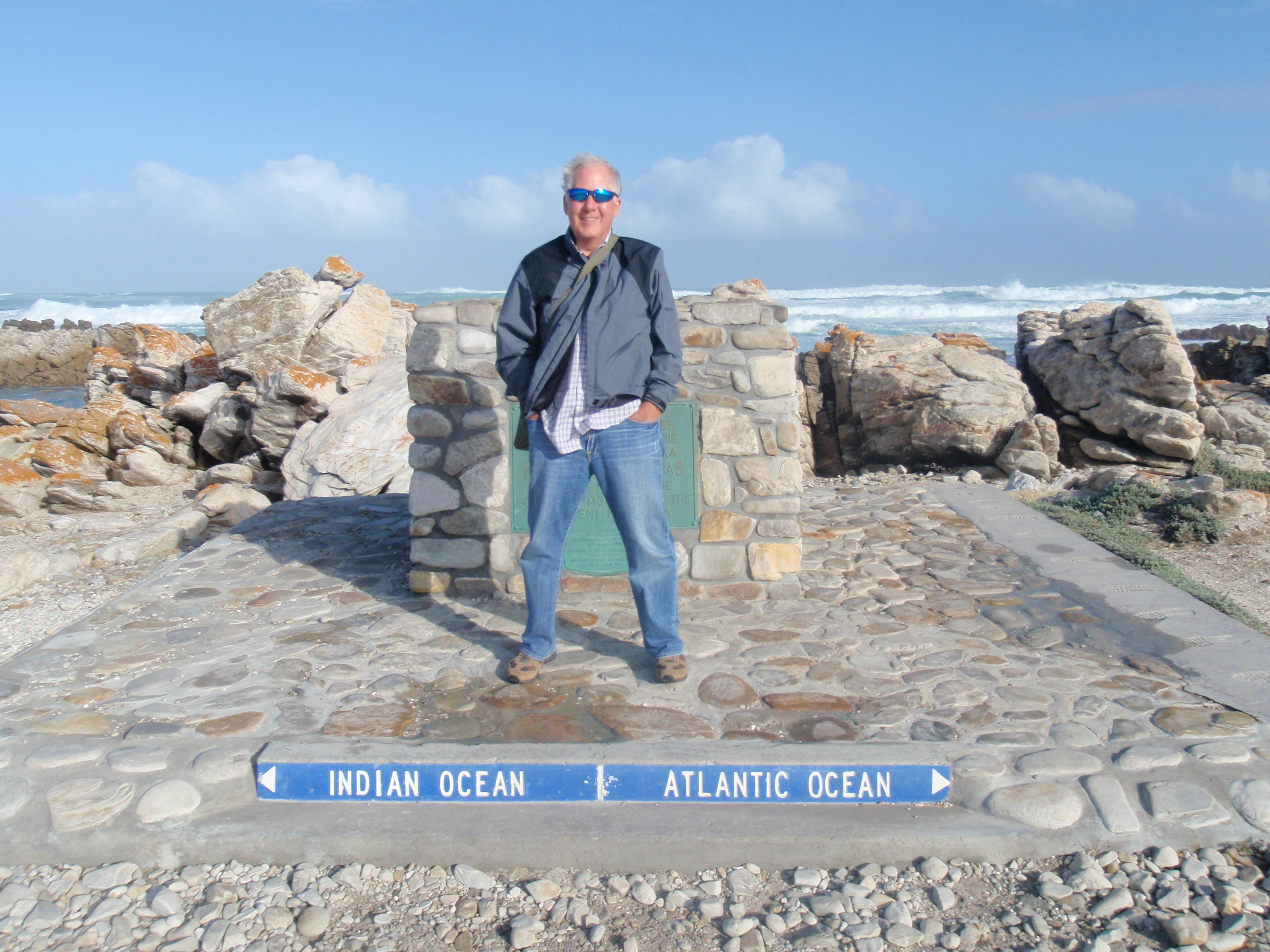
That afternoon we arrived in Cape Agulhus, the southernmost point in Africa. This is truly where the Indian and Atlantic Oceans meet. We had a cup of tea at the local lighthouse, checked into our B&B right on the beach, and went to the southernmost restaurant in Africa to watch the men’s Wimbledon finals and grab some dinner. I love Roger Federer, one of sports’ classiest athletes, but I was pulling for Murray.

The next day we left the coast, went through a lovely mountain pass and headed into the Little Karoo, a more desert-like environment devoid of large trees, reminiscent of many areas of the American southwest. Our goal was Oudtshoorn, ostrich country.

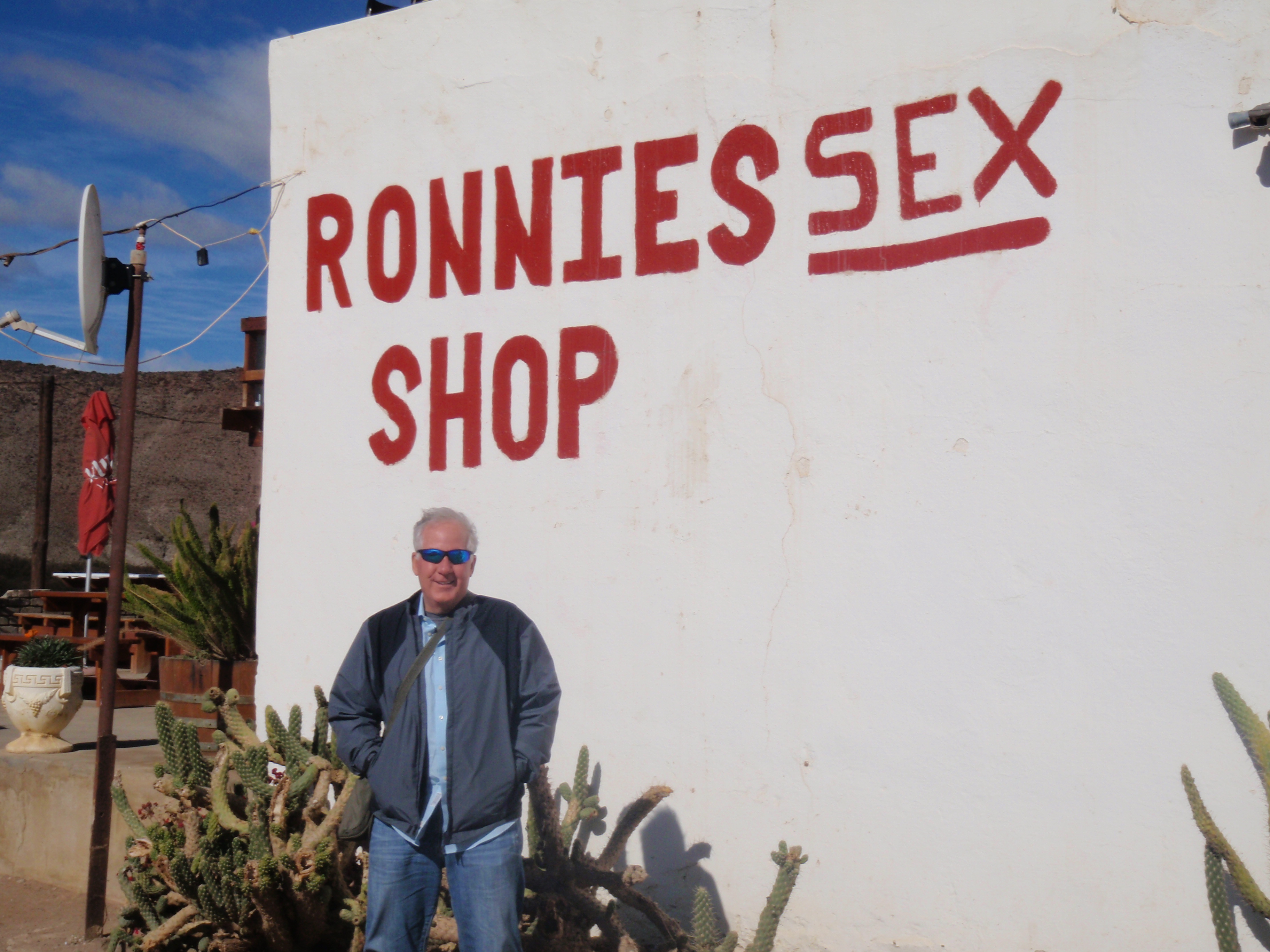
We stopped for a bite at Ronnie’s Sex Shop. For years it was just Ronnie’s Shop and it struggled for business, but a truck driver with a bucket of red paint and a knack for marketing added “sex” to the name and now Ronnie is doing a booming business, including t-shirts, hats and other merchandise. Judging from the women’s underwear hanging from the bar ceiling, when the bikers show up on the weekends things get fairly interesting.

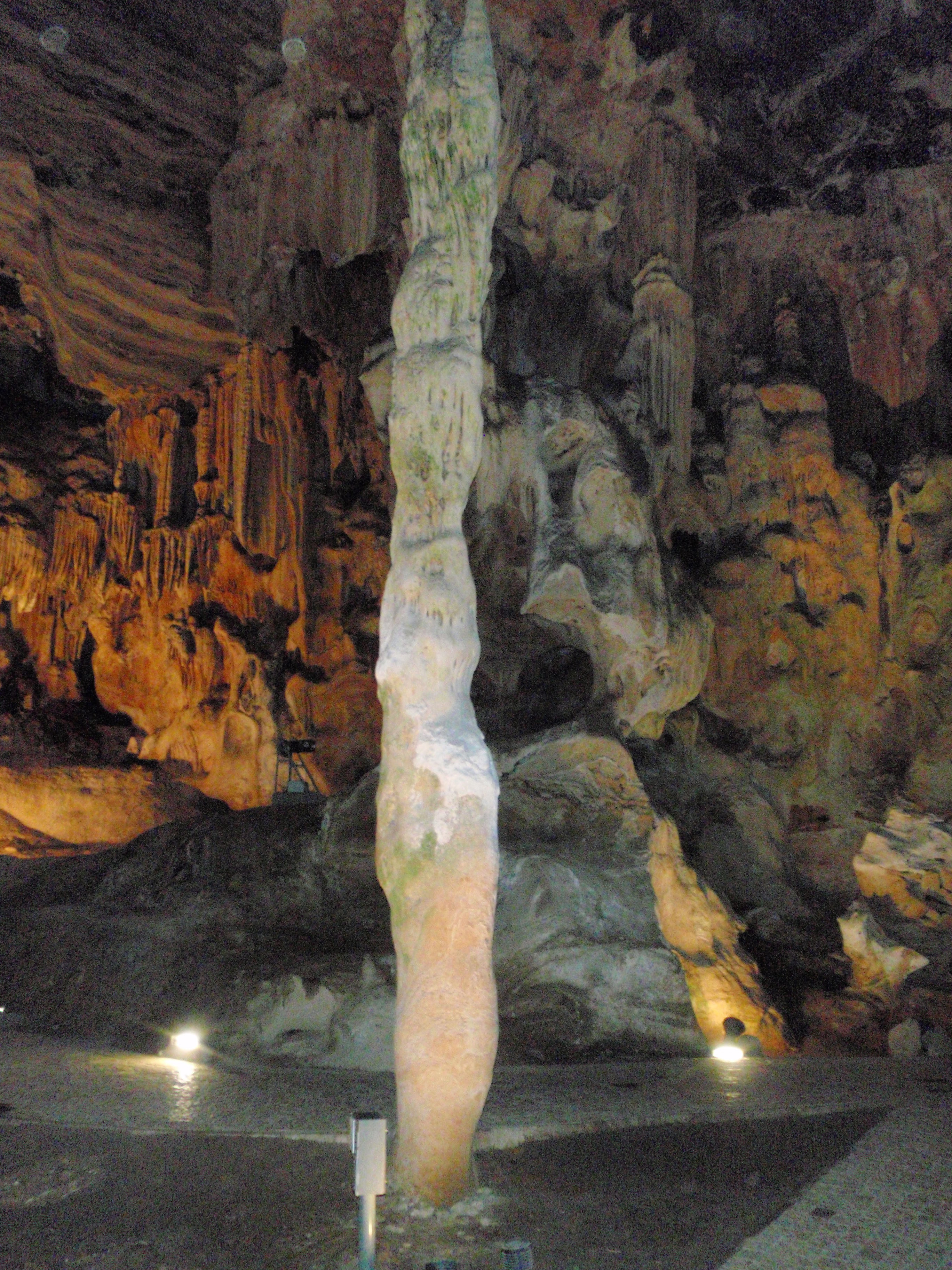
At the end of the day we went to Cango Caves, one of South Africa’s major attractions. I couldn’t handle all 1500 steps so cut the tour short but did see the two largest caverns, and they were huge and haunting. It’s pretty amazing to see an 800,000-year-old stalagmite. In the largest cavern they used to hold concerts for up to 1000 people until vandalism forced them to stop, and our guide sang for a minute to demonstrate the acoustics. He was a member of the Xhosa tribe, and their language incorporates clicking sounds. The pronunciation of Xhosa is “KO-sa” if you put a click before it. This guy had a wonderful voice, and the clicking integrated so perfectly with the words of his language. It was truly beautiful. For dinner that night I had a beef medley of ostrich and kudu, a large antelope, and both were lean and delicious.

*   *   *   *   *   *   *

I mentioned that Peter is quite the historian, and I can’t begin to do justice to everything he told me in the course of five days, but here is a Cliff Notes version, some of which I might have remembered accurately.

Between 110 and 180 million years ago there was an enormous seismic event in Gondwanaland, in the big Karoo in central South Africa. The world had been one great landmass but this explosion caused South America, Australia, Antarctica and India to break off from Africa and go their separate ways. It’s fun to look at a map and see how everything used to fit together.

Then there were some dinosaurs.

Eventually, according to the locals, the first man evolved here. They make the same claim in Tanzania, but South Africa seems to have better evidentiary support. Either way, for all of you who believe in the theory of evolution, you originally came from Africa.

In the late 1400s some Portuguese guys (remember Vasco de Gama?) stopped by looking for India, which would have been easier to find if it had still been attached. They moved on without planting a flag, and no one else came along with the objective of colonization until the Dutch arrived in 1652.

All was copacetic until the Brits dropped by in 1790 and started the Frontier Wars, finally capturing the Cape area in 1806. Then they moved north and started a 35-year war with the Zulu. Meanwhile the Boers, the descendants of the Dutch, tired of British rule and started to move out of the Cape in a Great Trek, but they would end up fighting the Brits twice more, in the Boer War of 1876, which was about diamonds, and the Anglo-Boer War at the turn of the century, which was about gold.

And the British also had their hands full with the two biggest tribes: the Zulu, as I mentioned, and the Xhosa. (Nelson Mandela was a Xhosa, as are many current members of the political hierarchy in South Africa). Both were formidable opponents, but in a truly bizarre twist of history a Xhosa witch doctor convinced the tribal leaders that they would be strong enough to defeat the British only if they burned all their crops and killed all their cattle. Which they did. And they all died. It’s called the National Suicide of the Xhosa.

In 1910 the Union of South Africa was formed with four provinces, and a Boer general, Louis Botha, was named president by the British. In 1948 the National Party came into power and soon implemented Apartheid, and for many years the world shunned South Africa. But in early 1990 President F.W. de Klerk released Nelson Mandela from jail, and in 1994 Mandela and his African National Congress took power, which they have had ever since. And the world is doing business with South Africa once again.

*   *   *   *   *   *   *   *

Out of the Karoo, back toward the coast through another pass, back toward golf country around George. We stopped by the Links at Fancourt, where the President’s Cup was played in 2003, and Fancourt itself, which has 36 holes. Impressive facilities, wish we could have played.

Peter told me the story about driving a bus full of Finnish kids in their 20s, and stopping for a 5-minute break. They all ran down to the public beach and immediately got completely naked and jumped in the surf, and some wouldn’t come out for 30 minutes. “That’s what the Scandinavians come here for, they are buying the sun. The Germans come for the scenery. The British come to focus on their history in South Africa, and they don’t want to know about anything else.”

“And the Americans,” I asked?

“I think I tend to get the highest-end Americans,” he said, kindly not pointing me out as an exception. “Professional people and teachers. But the Americans are very open and the most rounded, they want to know about everything. And they ask the best questions. Canadians are pretty good as well.”

At some point we stopped at a place called Storm’s River. If I recall correctly this is near where the first man originated, according to Peter. In any case there was a lot of beautiful coastline and the park was full of various smaller antelope and other animals. But the most interesting site was this strip mall – I can’t think of a her description – owned by a wealthy man who has an obsession with Elvis. Each year in September this place hosts an Elvis impersonator contest and pictures of participants cover one wall of this “museum.” There is a Marilyn Monroe cafe’, a bunch of vintage Cadillacs and Chevys, and it was an incongruous but extremely welcomed bit of Americana.

We continued to see lots of amazing coastal scenery as we headed to Knysna. We stopped at the Southern Hemisphere’s highest bungee jump and watched a couple of people go. Peter said about half his clients jump. I didn’t. Blamed it on the knee. When we got to our stop for the night we drove to the top of Knysna Head, where the Indian Ocean comes through an opening between two enormous head rocks. It was so rough this day that the South African Navy couldn’t come through for a scheduled appearance in town.

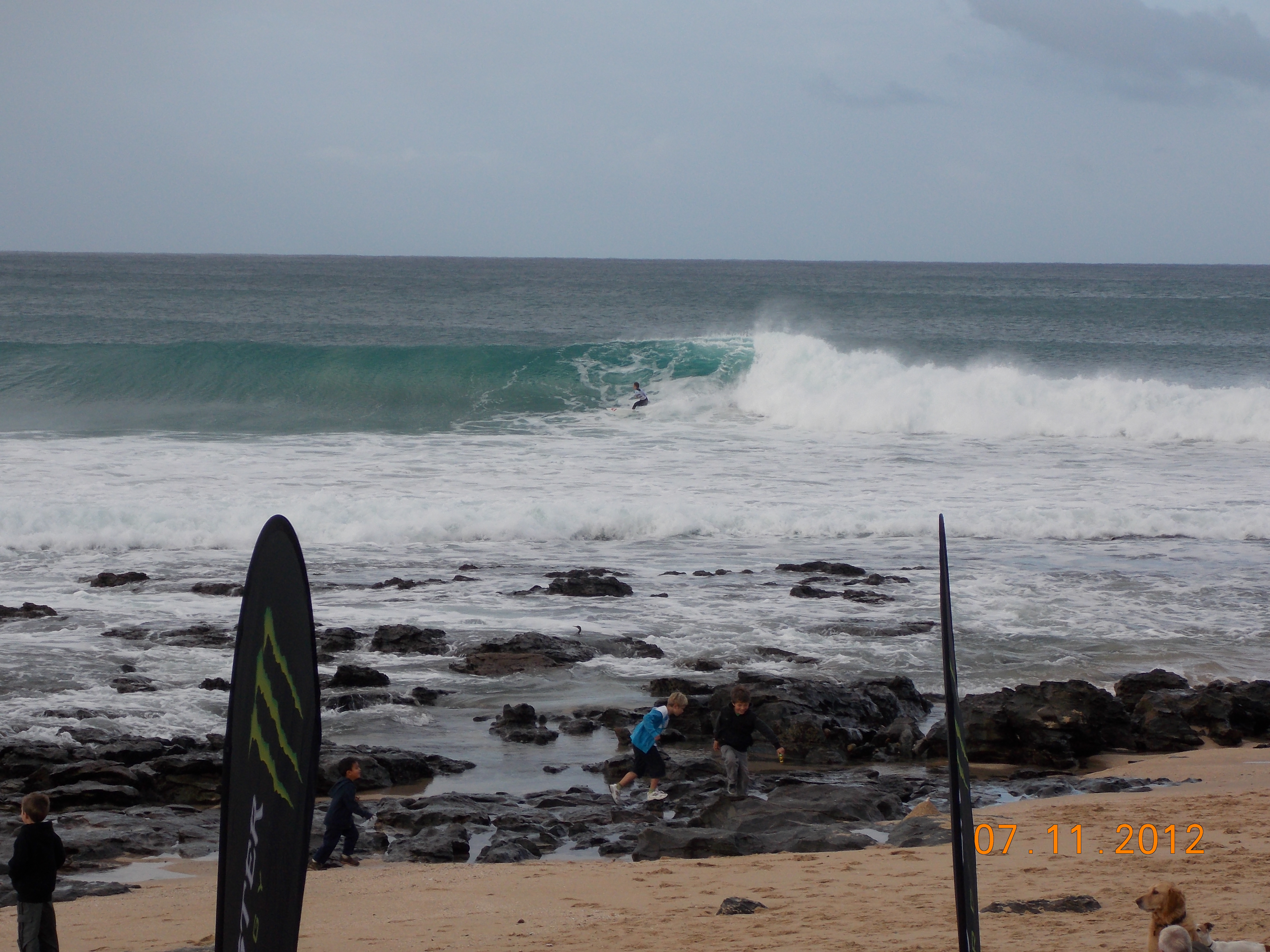
The next day we took a detour to Jeffrey’s Bay, where the biggest surfing tournament of the year in South Africa was underway. We easily found a parking place and watched for 30 minutes or so. I’ve seen events like this on TV but it was fun to be there in person and see the strategy for the waves play out.

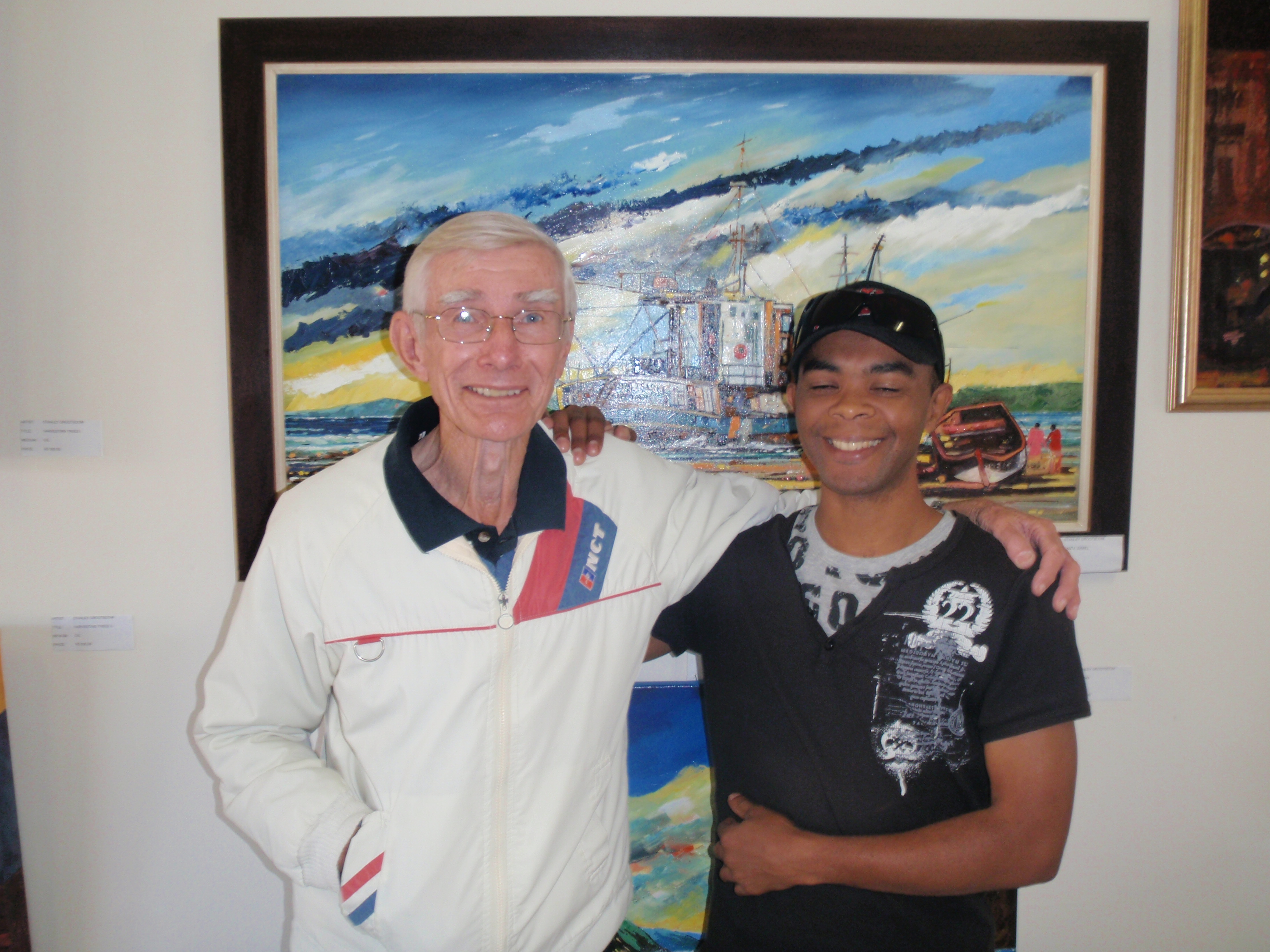
We stopped in a town called Sedgefield to visit a friend of Peter’s, an artist named Stanley Grootboom. Stanley is a Bushman – descended from the true South African natives – and a very talented painter; he is going to New York for two months next year to paint the history of South African Bushmen. That’s Peter and Stanley in the photograph, in front my favorite painting in Stanley’s gallery.  

We stayed our final night at a citrus farm with a very nice family, long-time friends of Peter’s, and had a braai (barbeque) with the proprietors, Greg and Julie; a father and his two kids from Northern Ireland; and another South African couple. A really pleasant, relaxed evening.

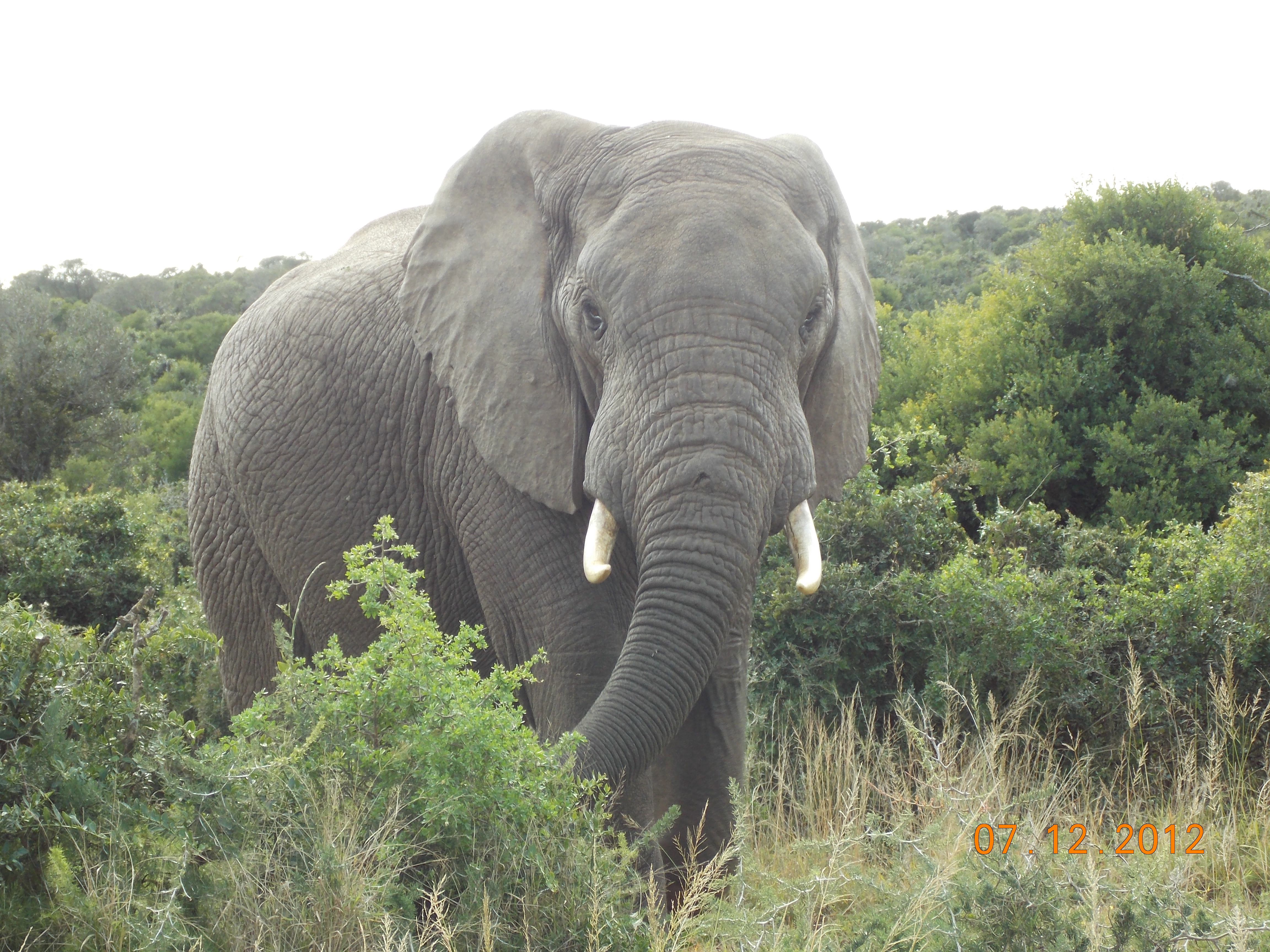
On our final day together Peter and I drove through Addo Elephant Park. He immediately got very excited by a meerkat sighting, very rare, apparently. We saw many elephants, a couple of families at first, and then a lone male that Peter was sure was the rejected import from Kruger National Park. Over the years the Addo elephants have been getting just a bit smaller so they brought in four big males to replenish the gene pool. Three had been accepted by the females but one had not, and he roams the park by himself.

Just beyond the northern edge of the park is Port Elizabeth, Peter’s home and a beautiful city 1.5 million known for its beaches and great weather. Peter had called (that morning!) to make me a doctor’s appointment. The guy was great and diagnosed my knee issue as a damaged MCL; he didn’t detect any loose cartilage, a  plus. The amazing thing to me was that I got to the doctor’s office, had my appointment, went next door to a pharmacy, got a new prescription filled and one from home refilled, all in less than 45 minutes and all for less than $70. Almost as amazing as the elephants.

Less than a week to go in South Africa, with Victoria Falls, Kruger National Park and Johannesburg yet to come.


Categories: Uncategorized

South Africa 1

Flying into Cape Town you can’t help but be stunned by the natural beauty. I had no idea it was so mountainous, dramatically so, and this time of the year the fields and farms between the mountains are lush and verdant. And of course there is lots of water. I asked my driver on the way from the airport which way was the ocean, and he said: “both ways. Atlantic to the right, Indian to the left.”

After a rest day I had three consecutive days of tours, with three different guides: one black, one white, one colored. That’s the way the races are differentiated here, “colored” being a very acceptable term that refers to anyone of mixed race or descending from one of many cultures including Malaysian, Indonesian, etc.  My black guide, Ludumo, took me on a tour of the townships surrounding Cape Town so I expected him to be political and opinionated; I wanted that from him. The next two guides took me to wine country and on a very scenic tour to the Cape of Good Hope, but they were open with their opinions on South Africa, its problems and its politics. And their perspectives were all very different. Apartheid, in the form of the Group Areas Act of 1952 which forced everyone to live only with their own race, is a cloud that won’t go away. There are many people here who are either defensive or angry about the past.

Of the 50 million people in South Africa 40 million are black, four million are white (three million considered Afrikaner and one million British), four million are colored, and two million are primarily Asian. The African National Congress, Nelson Mandela’s party, has been in power since 1994 and with such a dramatic racial imbalance it’s difficult to imagine the opposing Democratic Alliance ever presenting a challenge. Now that anyone over 18 can vote the ANC does an effective job of keeping the tribal chiefs happy, and the chiefs in turn guarantee support for the ANC at the polls. The DA attempts to court the bigger tribes by pointing out the ANC’s unfulfilled promises for things like improved education, but the loyalties are strong.

The townships tour was shocking, as I’d anticipated. It’s not just the ramshackle huts made of cardboard and corrugated tin, or the rows of port-o-johns ready to topple into a drainage ditch. It’s the scope of these places, how huge they are and how far they extend, and how many people are packed in there. We started in the township where Ludumo lives, called Longa; 82000 people live in not much more than a square mile, I would guess. There are a few nicer homes and some paved roads through the heart of the community, but away from the core the conditions are unspeakable.

We went through three or four more townships, all of them larger than Longa, all jammed together, reaching endlessly along the highway toward the airport. Ludumo took me to one township he said was all colored … “much bigger problem here with crime and drugs,” he said. Others would tell me a different story.

At the end of the tour we visited the District 6 Museum. District 6 is closer to the center of Cape Town, and in 1966 the blacks living there were uprooted by apartheid and relocated to where the townships are now. The museum provides a detailed and emotional look and the personal stories of so many people who were happily working and raising their families only to be thrown out of their homes.

It’s a lot to process, and I was relieved the next day to do something a bit less intense: sample some wines. The tours are as diverse as everything else in this country. I had others with me this time, a family of three from Brazil who neither spoke English nor drank wine, and Chris and Cathy, a terrific couple from Australia. We stopped at two vineyards for tastings in the morning, had lunch in a delightful and well-known French village called Franschhoek, had one more tasting in the afternoon and then headed back to town with a nice little buzz. Chris and Cathy and I made plans to catch up in Zanzibar, I had dinner that night with Patrick Nolan, the guy I met on the street from Jacksonville Beach, so all in all a good day and a chance to see some truly beautiful countryside.

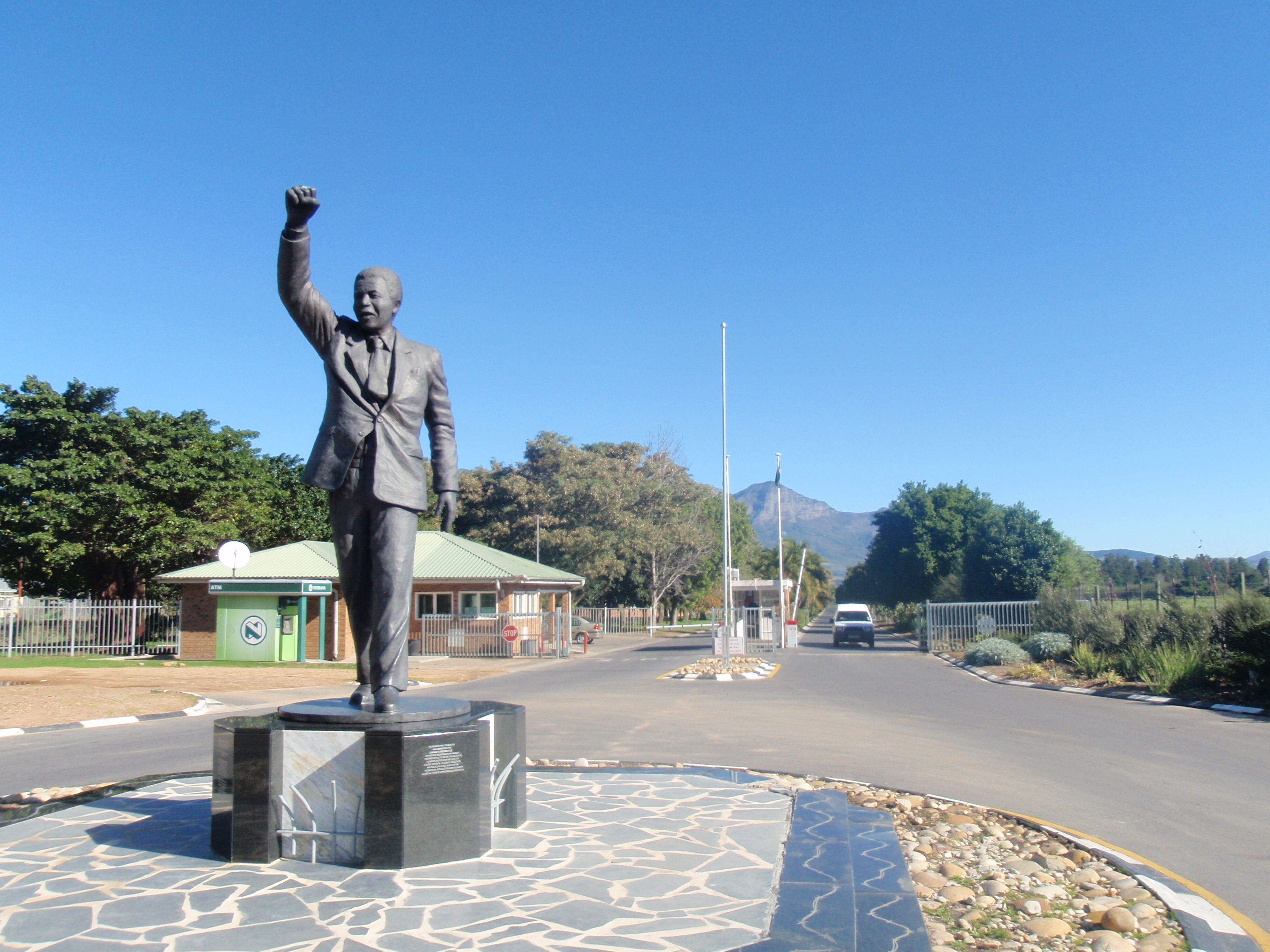
Our guide during the wine country tour was an older Afrikaner, a white guy of Dutch descent. Throughout the day he said things that in the States would be considered racially insensitive. At the same time, though, he insisted on taking us to the Groot Drakenstein Prison, from which Nelson Mandela was released to freedom in 1989. He was quite obviously emotional about this place and he even quoted some of Mandela’s comments from that day. Mandela was universally loved and respected, and he is missed in a position of leadership. 

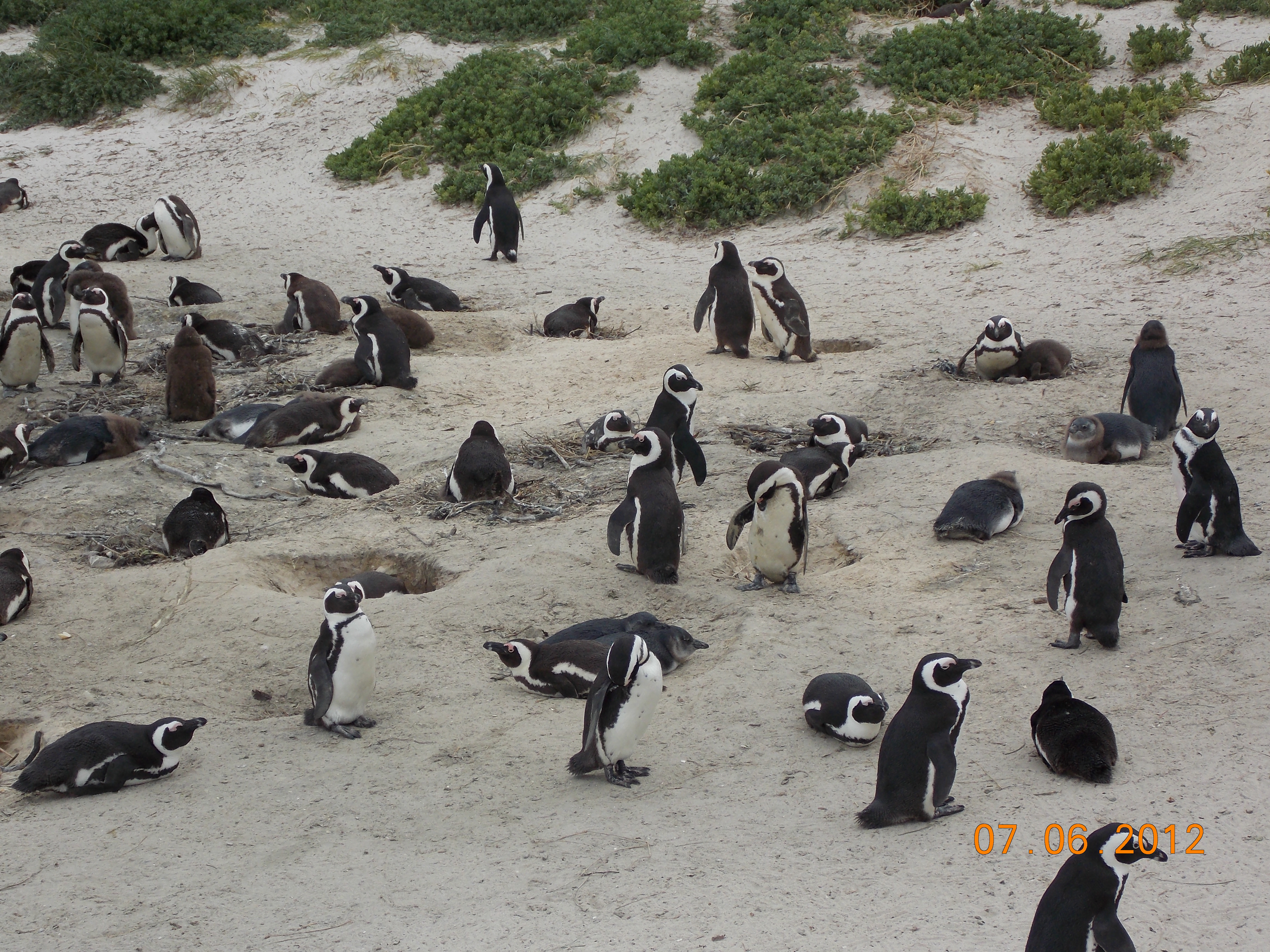
On the final day of touring we saw some seals in beautiful Haut Bay, saw some penguins, and had a wonderfully scenic drive to the Cape of Good Hope which, I was surprised to find out, is not really the southernmost point in Africa; I would get there in a couple of more days. I was limited in how much I could walk, which was frustrating, but enjoyed the day and the company. In our van was a family of five from Pakistan, a young couple from Finland who are in South Africa to research elephants, and Ben, an American who was attending a conference in Johannesburg and decided to come to Cape Town for a few days. Ben has an interesting job. He is head of biological security at Yale University, a department that employs 50 people. He said that at Yale, as with many of the bigger schools that do a lot of research, the community is demanding that the university take responsibility for making sure the Ebola virus some student is working with doesn’t wipe out New Haven.

The highlight of my final day in Cape Town was a dinner party with some local folks arranged by Arlene Pullin, who did an amazing job putting together my entire 20-day South African itinerary; she was introduced to me by my friend Dennis Alpert, who had spent three years with his family in Cape Town when working for the PGA TOUR. We were guests of Margi Biggs, a marvelous woman who has been nominated for South Africa’s Woman of the Year because of the very successful non-profit organization she started called Street Smart, which helps street kids find a better path. Margi somehow managed to be a thoroughly entertaining hostess while preparing a gourmet meal, and her guests were terrific fun as well. It was a great night, involving a minimum of political conversation and some very good wine.

I would leave Cape Town the next day feeling like I had missed quite a lot. I wanted to see Robben Island, where Mandela was imprisoned for so long, but I didn’t because of timing and weather. I also didn’t go up to Table Mountain, a majestic plateau that overlooks Cape Town and has a revolving cable car that insures everyone gets every possible view. You can take a couple of hours and walk up and then ride down, which with good knees would have been fun. Gives me a good reason to return.

But overall Cape Town gave me an exceptional introduction to South Africa and the issues that exist here. And it introduced me to a lot of wonderful people who may have different perspectives on very complicated issues, but they also have hope, and that can take them a long way.

Categories: Uncategorized

It’s a Small World, Part 1

It was my first full day in Cape Town, and the morning was full of promise. The shower at the Braeside B&B was hot and well-distributed. Michael, one of the owners of the establishment, prepared an amazing spread for breakfast even though I was the only resident, and informed me that Kenya Airways had called to say they’d located my lost luggage and it would be delivered later in the day (in fact it would be another 36 hours).  And while walking to the waterfront area I stopped in a pharmacy and some very nice folks helped fit a wrap for my bum knee. I limped less, and it was a happy limp. The luggage news, especially, was huge.

So I’m standing next to this guy waiting to cross the street, and I asked him if I was headed in the right direction. He said that he thought so; he was going to the same place.“You American?” I asked.

“Yes,” he said. “Where are you from?”

“Florida.”

“Man, I can’t get away from Florida. Where in Florida?”

“Jacksonville,” I said. Close enough.

“Unbelievable. I live in Jacksonville Beach.”

We live five miles apart and bump into each other on a street corner 11,000 miles from home. Astounding. His name is Patrick Nolan, he teaches the history of the Holocaust and the Vietnam War at Sandlewood High and FSCJ, and he travels every chance he gets. He was here for a couple of days before taking off by car to meet friends.Image

We spent the morning doing some sightseeing, including an hour at the excellent aquarium at the waterfront, and it couldn’t have been more pleasant. We ended up having dinner a couple of nights later before saying ‘safe travels, see you back in Jax one of these days’. It was a nice and quite remarkable coincidence; i’m sure it won’t be the last “small world” experience of the trip.

(And please forgive me if the title of this post has put that insidious little song in your head, as it has done to me.)

Categories: Uncategorized

On Safari

The above photo was taken on the final day of our safari experience. We were on our way out of the Serengeti, at the beginning of what would be a nine-hour drive back to the Kilimanjaro airport, most of it over dirt roads, some so heavily rutted that they threw you all over the vehicle in what the guides call “an African massage.”

Anyway, the four of us were safari-ed out and half asleep when Joseph, our guide and driver, spotted some lions by a watering hole just off the road; the other Serengeti Pride vehicle with five more of our gang was already there. A male and female were ambling about a watering hole and four more females (the male looked very tired) were overlooking the scene from a hill above. One of the lionesses moved before I could get the shot I wanted, which would have been very Mount Rushmore-like, but it was still an unexpected way to finish off our five days looking for animals. But that’s the way it goes on safari, you have to be lucky and find yourself in the right place at the right time.

Our itinerary took us to three very different locations: Lake Manyara National Park, the Ngorongoro Crater, and Serengeti National Park. We visited Lake Manyara the first afternoon; the area around the lake is heavily wooded and home to a wide assortment of birds and animals. You see baboons everywhere, often screeching and fighting in some kind of turf battle, always a lot of fun. ImageThe safari vehicles have a roof that rises up so you can stand and take pictures, and apparently the day we were there a baboon jumped into one of the vehicles and onto the lap of a young kid. The animal removed the kid’s glasses, determined they weren’t edible, grabbed a bag of chips and took off. That kid’s going to have a pretty good “what I did on my summer vacation” story when he gets back to school!

We had a couple of elephant sightings that first day, and at one point a fairly large group of them came out of the woods and sauntered across the road right behind our truck. No matter how many times you’ve seen elephants in zoos or circuses, it’s still quite remarkable being with them in the middle of their world. Image

The highlight of the whole safari experience for me was the Ngorongoro Crater, where we spent the entire second day. The Ngorongoro Conservation Area is over 8300 square miles and its centerpiece is the Crater, a massive eco-system self-contained within the walls of this extinct volcano.

We drove up to the rim of the crater and it was cold and foggy, rendering the scenic overlook useless, but as we headed down inside it cleared and we were amazed at the enormity and beauty of the place. You start out seeing a lot of zebras and wildebeests; it’s not long before you realize that the zebra and the wildebeest have to be the least endangered species on earth.

But from a distance we did see one of the most endangered: the black rhino. ImageThe biggest problem in maintaining the population is poaching; in some circles a black rhino horn can fetch up to $50,000. In the Middle East the contents of the horn are believed to be a powerful aphrodisiac, and in parts of Asia it’s believed it will cure many diseases, even cancer.

The poachers are sophisticated – they have helicopters, night-vision goggles, etc. — well-armed and relentless, but they are not the only challenge. Black Rhino are loners, and often when females are fertile there are no males around. When females do get pregnant the gestation period is long, and it takes six years to raise a calf. And they also have problems with disease. There are ongoing efforts to deal with these issues but it’s an uphill battle.

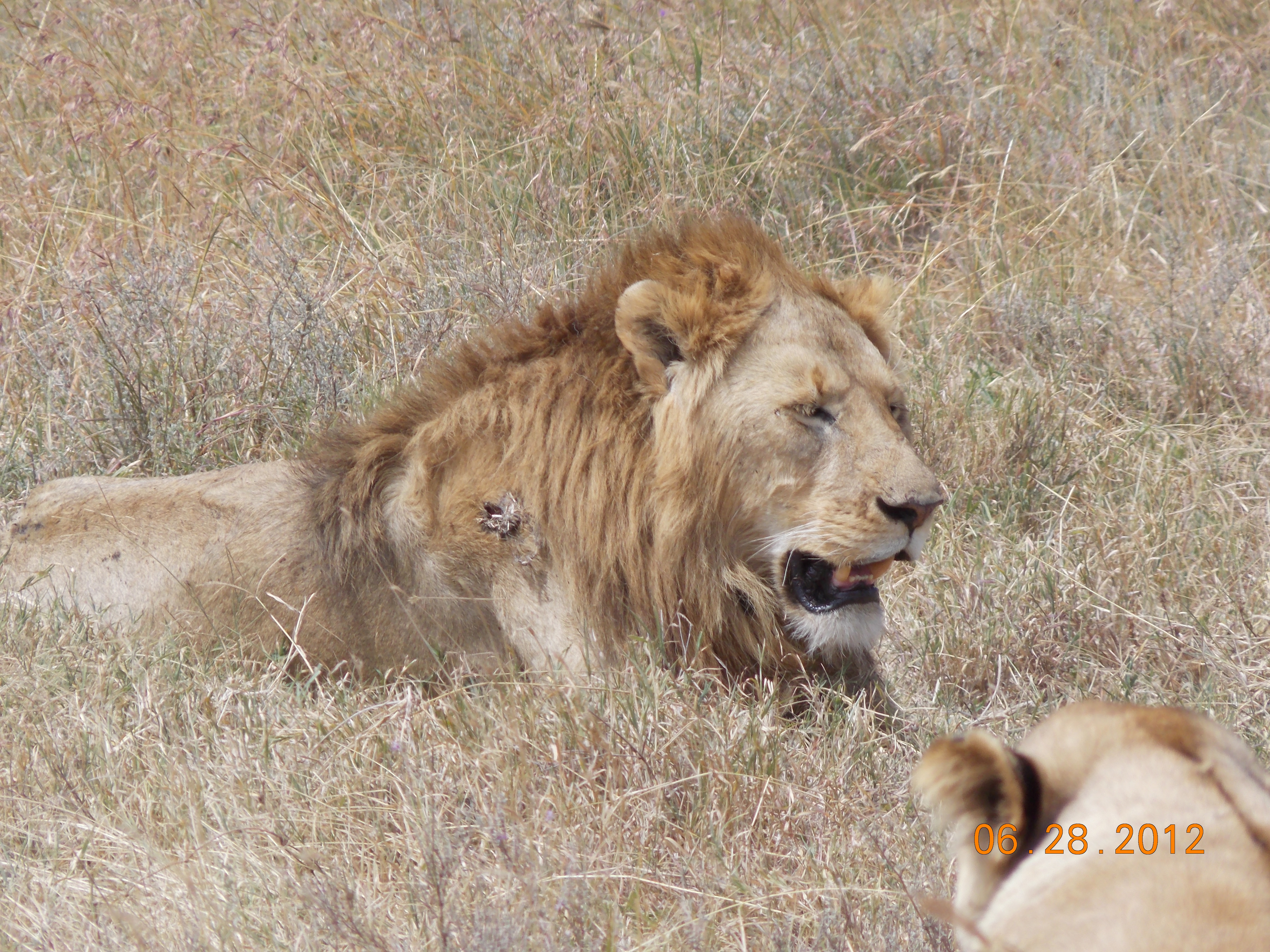
There are an estimated 25,000 large animals in the Ngorongoro Crater, and we ran across at least one of every variety. We saw a number of lions, several of them very close up; a female wandered in between the vehicles that had gathered before lying down in the shade of one of them. Image

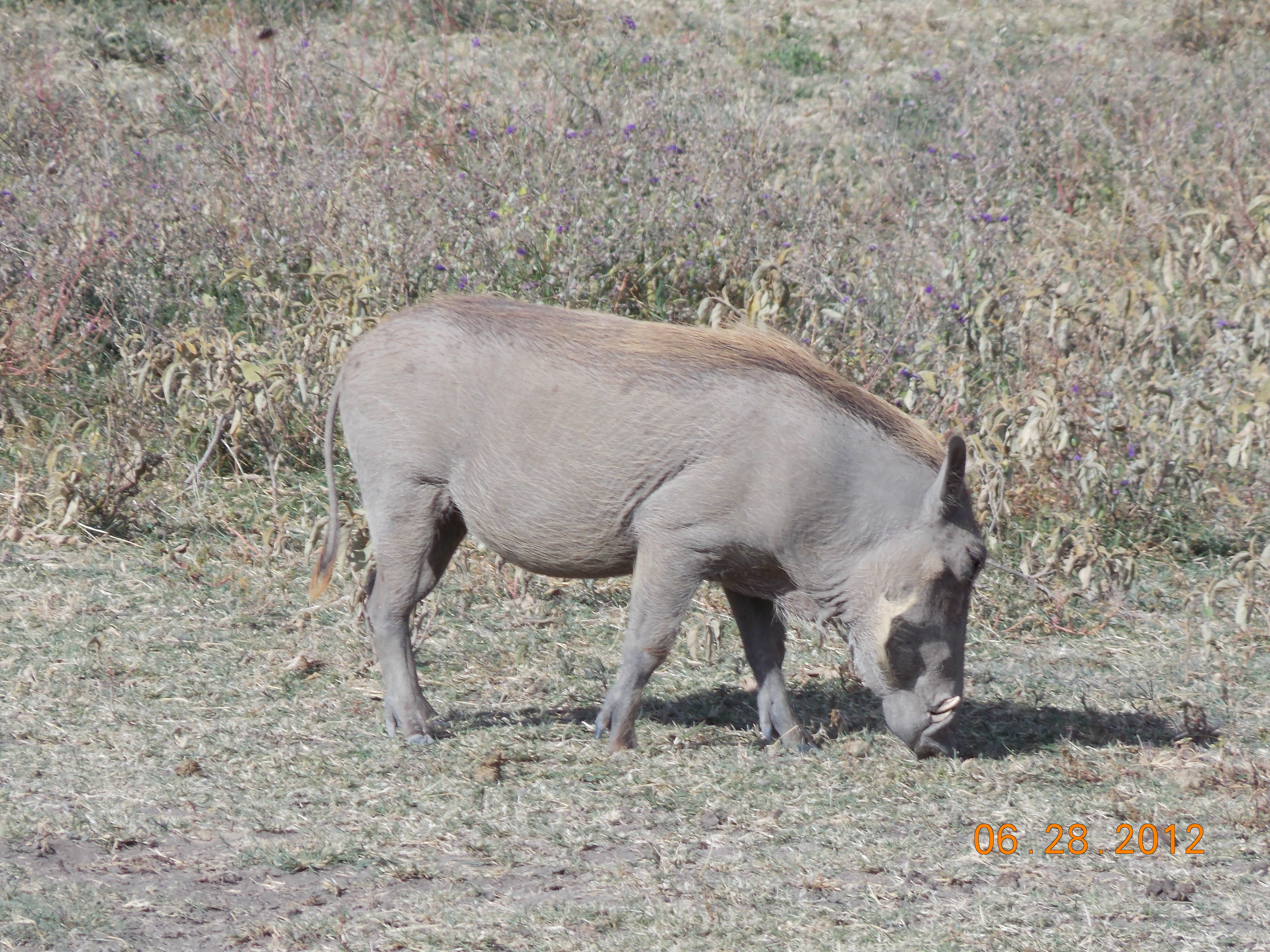
Joseph gave us a challenge: name the five biggest animals, five smallest, five ugliest and five most beautiful. Biggest: hippo, rhino, buffalo, lion and elephant. Ugliest: hyena, wildebeest, warthog, can’t remember the others. Warthog got my vote, not a handsome animal. ImageMost beautiful: cheetah, leopard, giraffe. Smallest: the only one I remember is the elephant dung beetle. We were all hoping for the breathtaking thrill of seeing a migrating herd of elephant dung beetles.

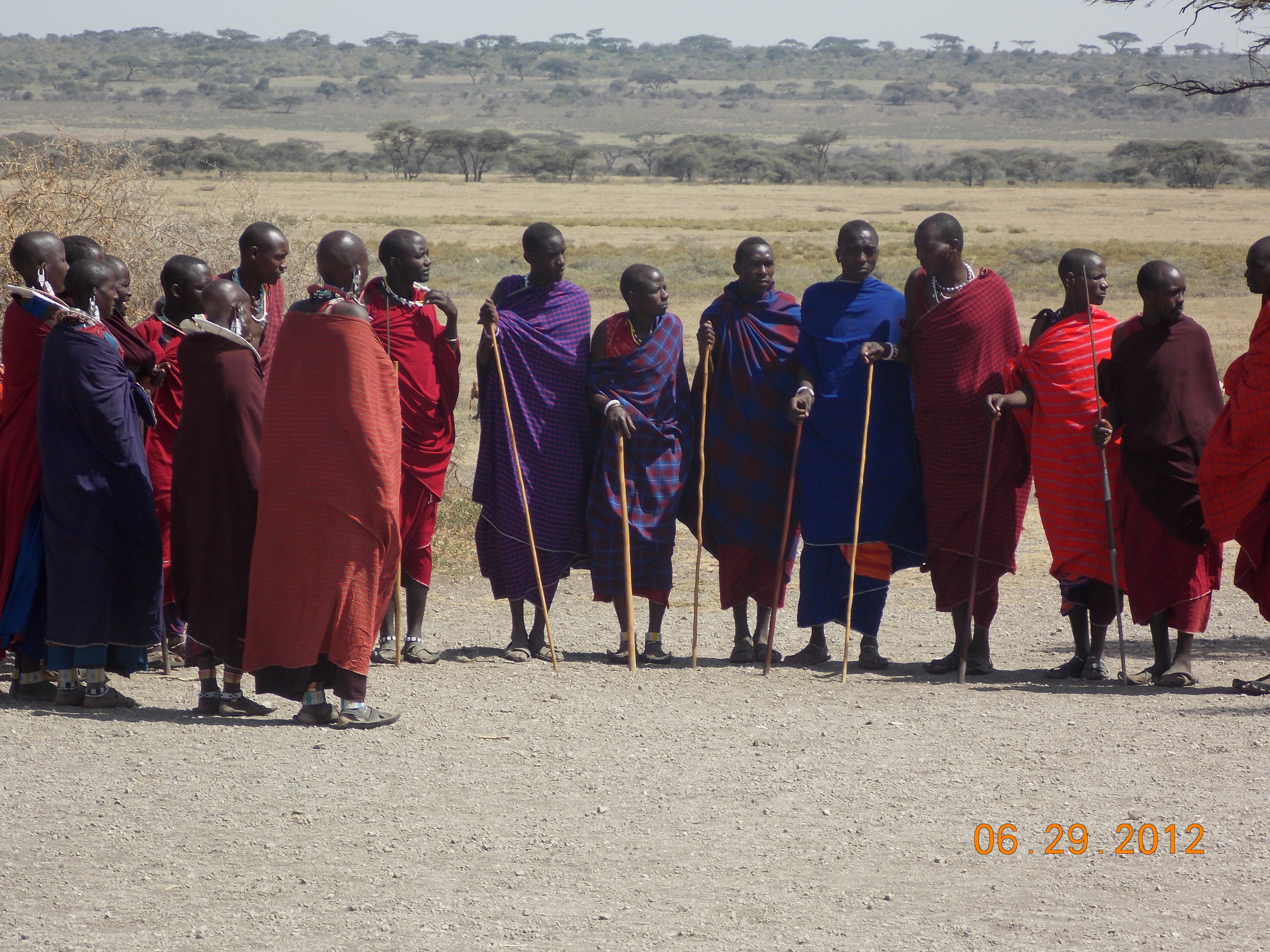
On the way to Lake Manyara the first day, and then on subsequent days throughout the Ngorongoro Conservation Area – except within the crater – we saw many members of the Maasai tribe, proud and noble, tending their cattle. Although spread over many hundreds of miles they are one of the smaller tribes and one of the most isolated. ImageOnly 20% speak Swahili, which 50 years ago was designated as Tanzania’s common language to insure all citizens could communicate. They live in small, circular villages, in homes built by the women and made of mud and sticks and dung. The sheep and goats are brought into the center of the village at night for protection from lions.

A Massai warrior’s net worth is measured in the number of cattle he owns, and the more cows he has, the more wives he can attract. The chief of the Massai has 40 wives and 400 children, quite a workforce. The three stages in a Massai male’s life are boyhood, warrior and elder, and the transition from the first to the second is strenuous. After circumcision, which a young boy must endure without flinching, he goes into the bush with an elder to study. Then in his mid-to-late teens he dresses all in black with a painted white mask and ostrich feathers, and has to stay away from the village until he has proven his worth. We saw a number of these kids by the side of the road, fearsome and defiant, demonstrating to passersby their readiness to become warriors. I wish I had a good picture of them to show you, they are an extraordinary sight, but if you point a camera at them, they point a spear at you.

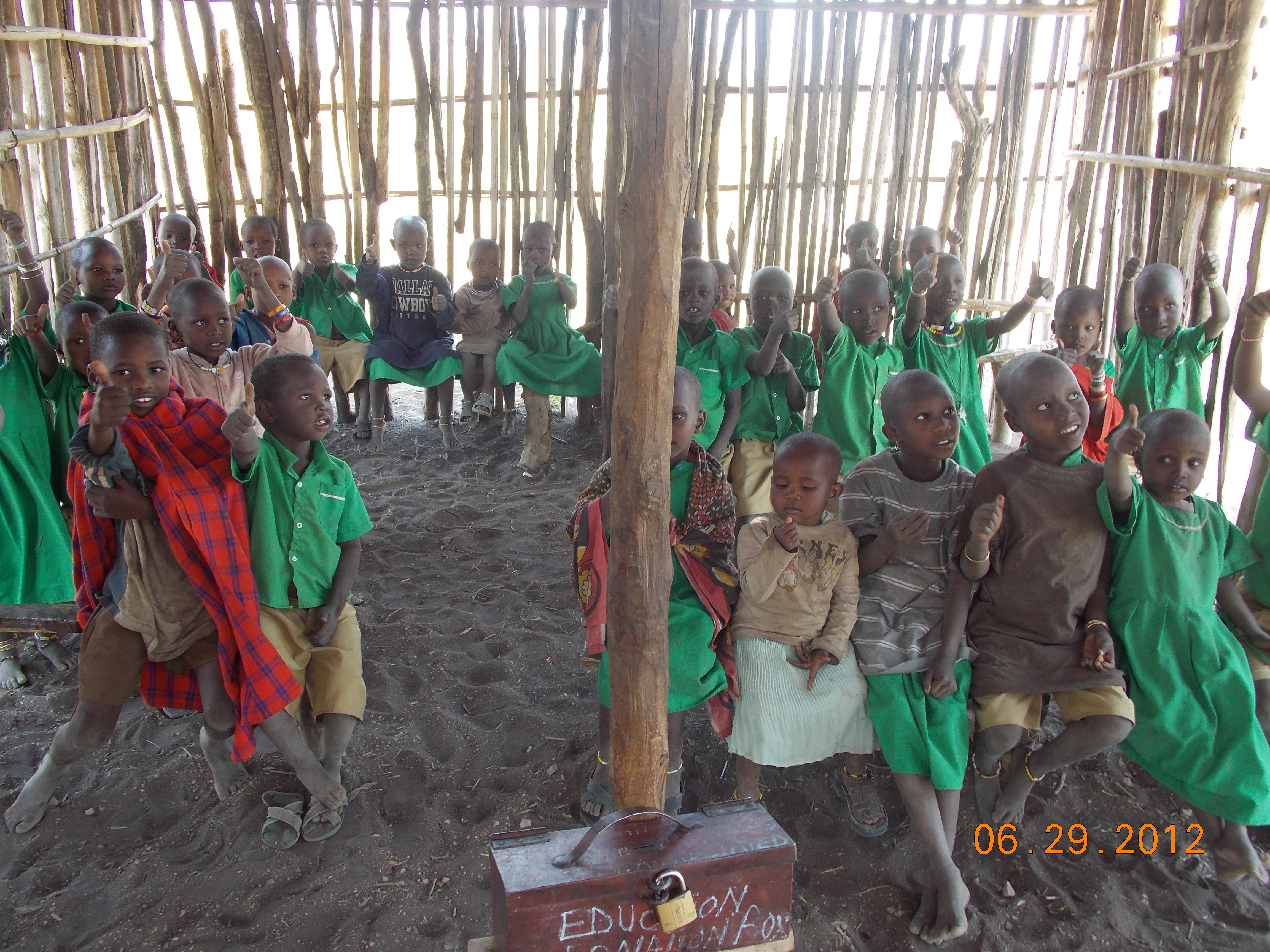
On the way to the Serengeti we stopped at a Massai village. Now there are traditional Massai, but there are also modern Massai, and these guys were definitely modern — several of them speaking very good English — not to mention capitalistic. We paid $20 each for the privilege of seeing some dancing, sitting in one of their homes, and visiting a kindergarten class. The kids were well rehearsed, giving us the “thumbs up”, and I loved that one guy in the back row was wearing a Dallas Cowboys shirt. ImageOn cue they counted to 20 in English, and when we dropped a coin in the donation box they all cheered. Even though they were in on the show they were absolutely adorable, and when one of them moved over on his little bench and beckoned me to sit next to him, he absolutely won my heart. We all agreed the experience was worth the $20.

We were staying in a tented camp, of which there are many in and around the park, and we arrived just in time to witness a magnificent Serengeti Sunset.ImageThe day before we had learned that a Dutch tourist had been murdered by thieves at one of these camps, by a gang of 12 guys who were eventually captured. Joseph didn’t really want to talk about it; he and his guide mates know how detrimental something like that can be to their livlihood. “It will never happen again,” is about all I could get out of him.

But our camp had very sophisticated security. I left the dinner tent for a moment the first night to grab something back in my tent, and out of nowhere a bushman with a bow and arrows was at my side, accompanying me down the path. I don’t know if he’d have been much good against 12 thieves, but he might have distracted a lion. We all joked that he probably had a .357 Magnum under his robes and that the bow and arrow were just for show.

I had romanticized the Serengeti and was very excited to see it, but in truth preferred the Ngorongoro Crater. You go to the Serengeti to see the cats that you can’t see in the crater, specifically leopard and cheetah. We saw two leopards sleeping in a tree, and two cheetahs sleeping underneath one. But we had a lot of amazing experiences with elephants, giraffes, hippos and lions. Image

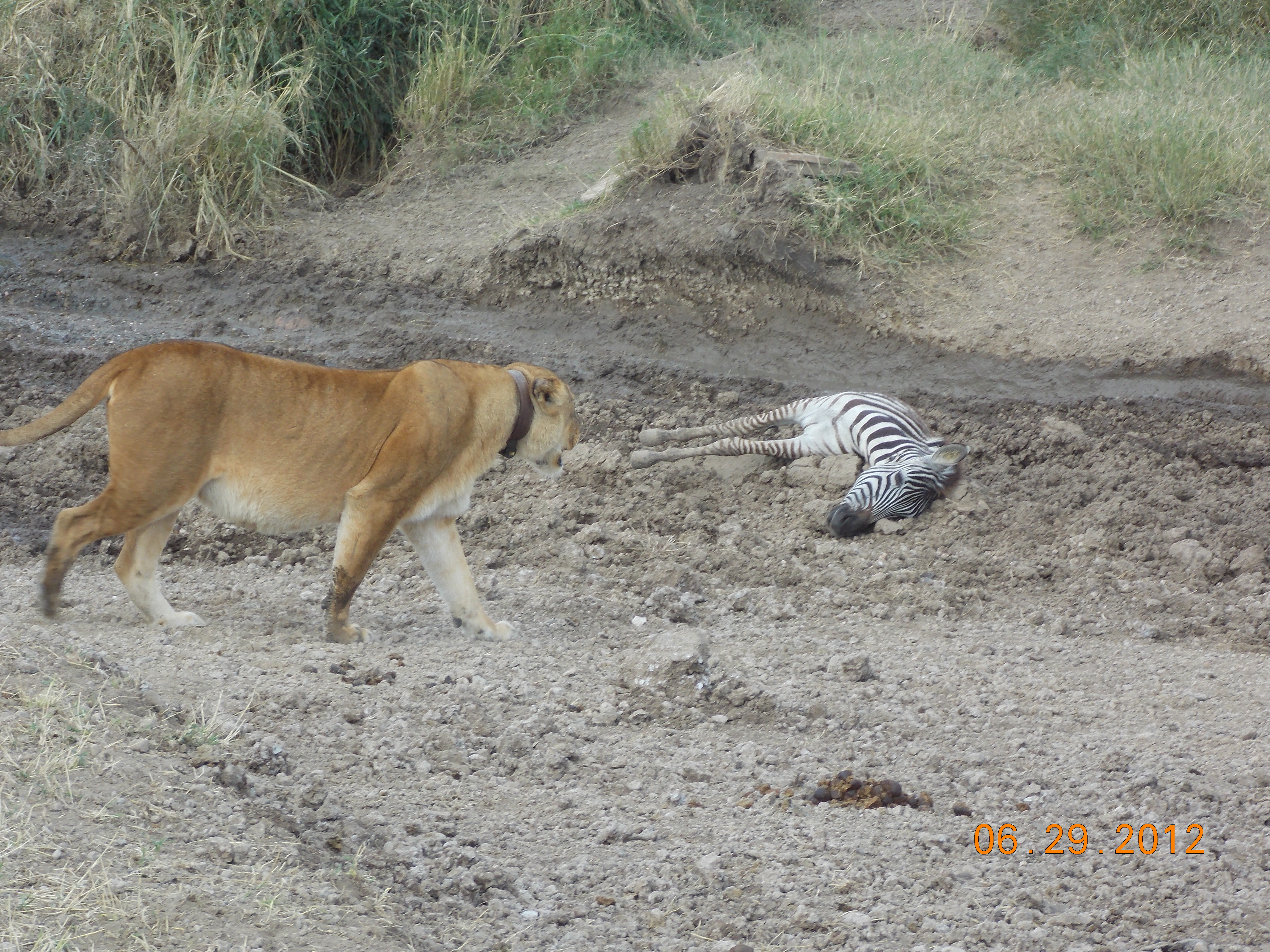
The communication network among the guides with all the different companies was remarkable; wherever there was a sighting of interest the word spread quickly and many vehicles would soon gather. At one point our vehicle came across a dead zebra in a small, depressed area by a bridge. Then we spotted a female lion about 75 yards away, then another female, then five cubs. One of the adults started ambling toward us, and we were convinced we were in for some good flesh-ripping National Geographic stuff when she got to the zebra. About this point we looked around and there had to be 15 safari vehicles in a semi-circle around the site; I never even saw Joseph make a call.

Anyway, the lion came over and sniffed the zebra, but wouldn’t touch it. The cubs climbed on it, but they all quickly moved on toward a herd of live zebra, who saw what was going on and hoofed it out of there. The guide network reported later that the zebra had been killed by a snake – either cobra or black mamba – and the scent of the venom is what turned the lions away.  Image

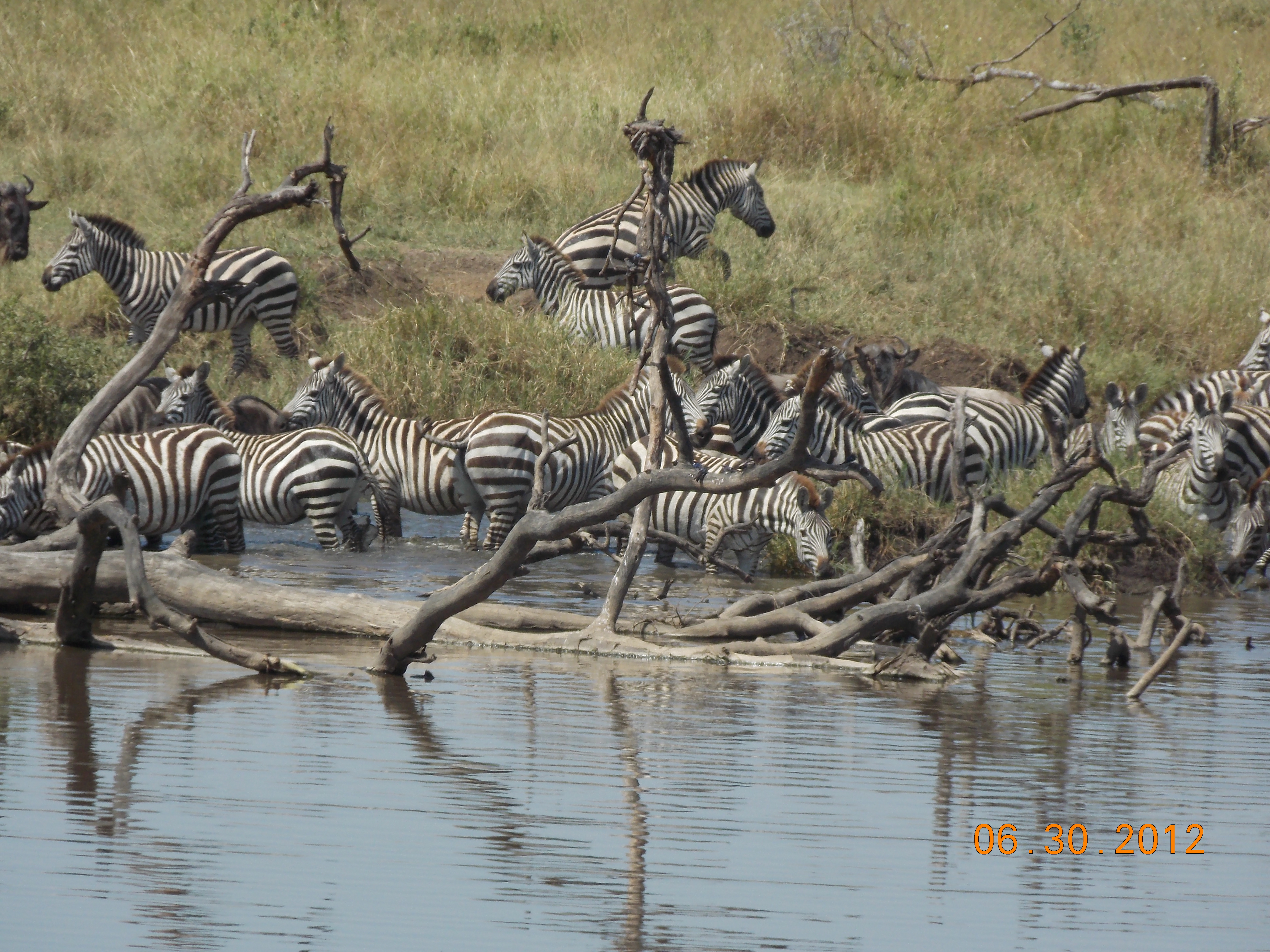
I thought that we would completely miss the Great Migration, but it turns out we were in the Serengeti for the tail end of it; some unexpected rains had reduced the urgency for the zebras and wildebeest to head north. We saw literally thousands of both species, in no particular hurry, huddling under trees during mid-day, wandering slowly north as it cooled off. The sheer numbers were staggering; I can’t imagine what it would be like to see the bulk of the herd.

ImageIt will be interesting to spend a few days in Kruger National Park in a couple of weeks and compare it to our experience in Tanzania. It will be difficult to equal of the beauty of the Ngorongoro Crater, or the uniqueness of seeing a majestic Massai warrior with a goat in one hand and a cell phone in the other.

Peace.

Categories: Uncategorized

Kilimanjaro 2

Because of a terrible internet connection the first post after Kilimanjaro wasn’t exactly what I was hoping for in terms of content and especially photos, so I thought I’d do a follow up with a few random thoughts and some pictures. Wireless has been out my first two days in Cape Town as well so I’m trying this from an internet cafe’ … travel and technology, not the best of bedmates.

My first two nights in Tanzania were at the Mount Meru Game Lodge, a fine and peaceful place. Three others from our climbing party were there also: Ken Lee, a 25-year-old financial manager who is the process of moving from New York to Boston; and Russ and Brent Wilde, father and son from Australia (Russ is originally from New Zealand). Great guys all, and the four of us ended up sharing a vehicle on safari as well.

Flying into Kilimanjaro with a 7:45 p.m. arrival I was hoping to get a glimpse of the mountain out of the plane, but it gets dark much earlier in Tanzania because of proximity to the equator and no daylight savings. But everything went smoothly upon arrival, and I had a solid night’s sleep. When I walked outside my room the next morning there were five or six zebra grazing 50 yards away, an ostrich taking a drink out of a pond, and about half a dozen monkeys chattering away on the roof of the adjacent building. It was a pretty good “you’re not in Kansas anymore” moment.

Because of clouds and fog we did not see the mountain during the first two days of hiking. We spent a very cold second night at our camp on the edge of the Shira Plateau, and when we emerged from our tents in the morning, there it was: huge and intimidating, and still so far away! ImageFor the next three days, as we walked across the plateau, up into the rocks and toward the base of the Western Breach, that mountain was always in front of us, always breathtaking, impossible to ignore. I think it helped give everyone a sense of purpose, and it seemed that the closer we got to it, the less intimidating it became.

Kilimanjaro is not really the mountain’s name: it’s Kibo. Kilimanjaro is the name of the National Park, an enormous area that once enclosed three great peaks: Shira, Kibo and Mawenzi. Shira erupted 750,000 years ago and collapsed, forming the plateau that we crossed on the third day. Mawenzi erupted at some point and just stopped growing; we saw it on the way down, a craggy and uninviting 16,000 feet. Kibo is still technically an active volcano, last erupting 1.2 million years ago. Why that name doesn’t get the billing it deserves as the largest free-standing mountain in the world and home to Uhuru Peak, the highest point in Africa, I don’t know. It’s probably Hemingway’s fault; The Snows of Kibo just doesn’t have the same lyrical ring to it.

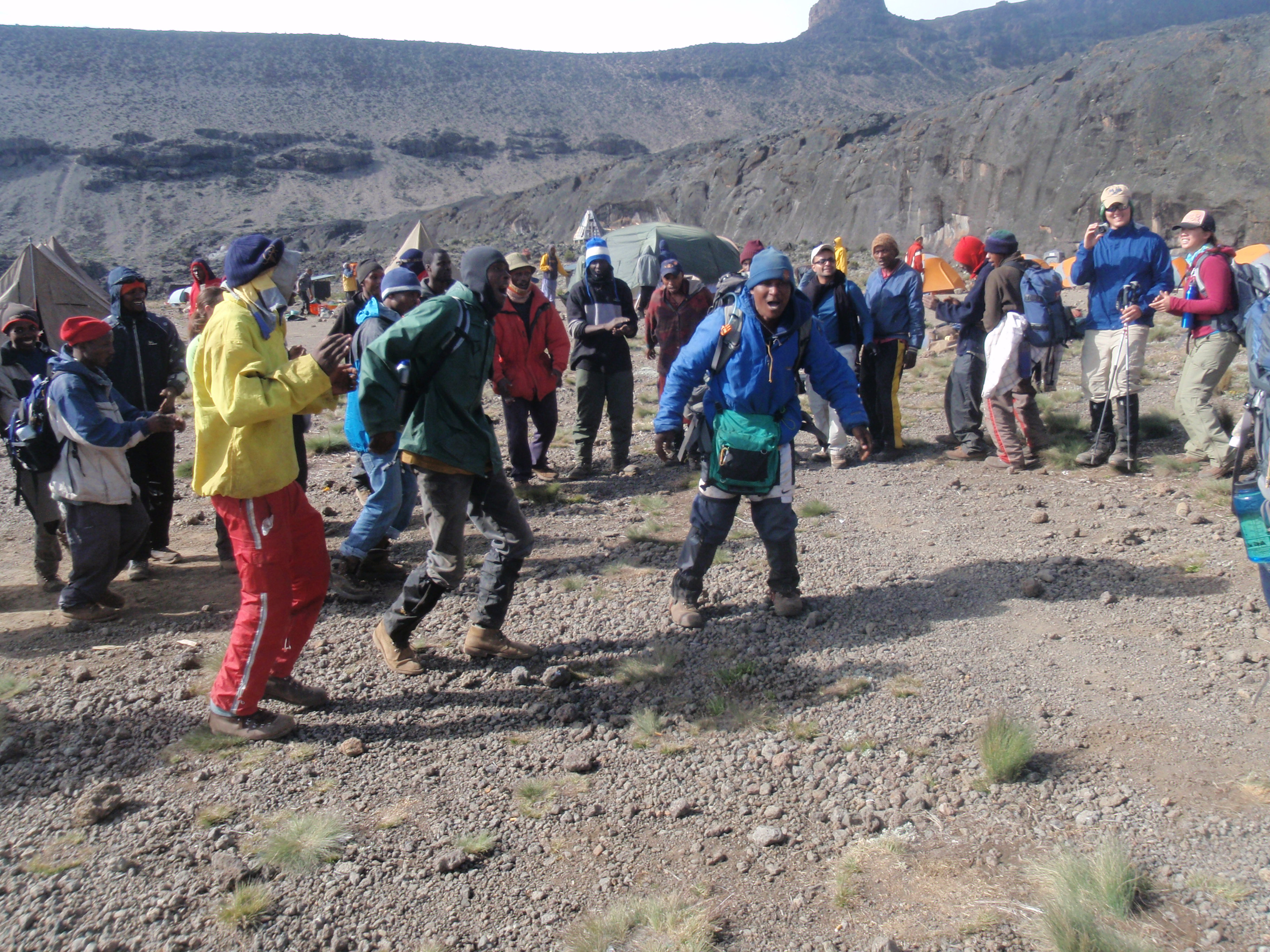
In the first post I mentioned the porters and guides and their amazing work, but I didn’t get into all the little things they do on a daily basis in support of the climbers. They were ever encouraging, greeting us as we walked into camp each day with high fives, singing their songs, saying “jambo, karibu” (hello, welcome), always smiling, always positive about what you had done that day. ImageOur leader Lema Peter’s cousin Emanual (“Ema”), who had the critical job of being in charge of water, was certainly the most vocal and outgoing (“loudest one in the family” said Lema), and was constantly coming up to you with a huge smile: “Gooda job, Babu, gooda job!” He was wonderful.

They clearly love what they do and feel fortunate to have these jobs. Their generous spirit and their good humor are infectious, and very uplifting as the climb gets more intense. But there are 120+ different tribes in Tanzania, each with its own language and beliefs. Lema told us the story of arriving atop the Western Breach on one trip to find a dog and a bunch of freaked-out porters. A few of the tribes evidently still believe in voodoo, and to find a dog running around at 18,500 feet, where there is no food and little oxygen, was terrifying to some of these guys. They surrounded the animal, rocks in hand ready to slay the devil, but Lema fabricated a story about the dog belonging to one of the park rangers and managed to defuse the situation.

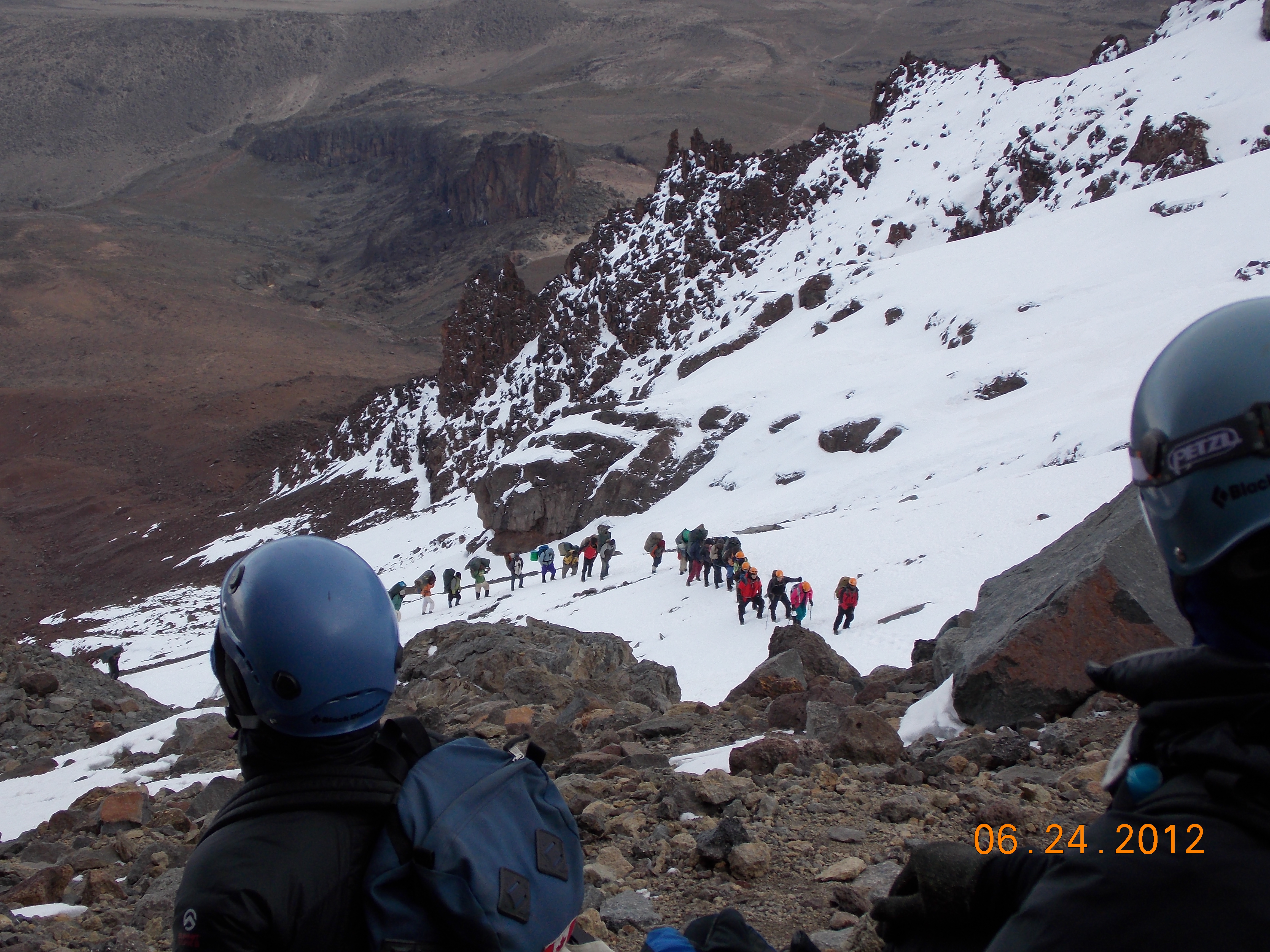
On day 6, the tough day up the Western Breach, we found out at lunch that a disaster had been barely averted. ImageWe all had to wear helmets throughout the day because of the potential of falling rocks, and coming up the Breach behind us the porter who was carrying our huge mess tent on his head had looked up to see a rock headed straight for him. He ducked in time and managed to maintain his balance, but the rock hit the bag, and the bag took off down the glacier. To his credit Lema accompanied several porters back down 1000 feet or so to retrieve it, and they were an exhausted group when they finally arrived at the Crater Camp at 18,500 feet. But that night the mess tent was up and open for business, right on schedule.

Serengeti Pride takes great care to insure safety and success. They transport a hyperbaric chamber in case anyone gets a particularly bad case of altitude sickness. They monitor pulse rates. Perhaps the best thing they do is add an extra day onto the experience to give everyone a chance to better acclimatize and to keep the pace slower. “Pole pole” (po-lay po-lay) is the mountain mantra: slowly. The extra day is one of the big reasons Serengeti Pride has a success rate in the mid-90% range while others hover around 70%

Lema did tell us a story about one client who didn’t make it to the summit. She was a 75-year-old woman who showed up with a duffle bag so heavy it required two porters to carry it, walking in tandem. The heaviest item in the duffle was a huge make-up case, and every morning the group would wait around and leave 90 minutes late because this woman had to work on her face. To her credit she made it to 16,000 feet before calling it quits and heading back down, unsuccessful in her summit attempt but looking damn good.

I love the picture of our whole group at the summit. That was such a special moment for all of us individually, but it was also rewarding to have everyone else make it. ImageWe’d been through a lot together, everyone had been supportive of one another, and it made the accomplishment more meaningful to succeed as a team. I mentioned Ken Lee (who “Tebowed” in front of the sign for a friend who is a Jets fan) and Russ and Brent Wilde from Australia. We had the cheerful, always smiling Canadian sisters Audrey and Levana Pang; K.J. Singh, a native of India who is now a consultant in D.C. and his climbing buddy Grant Morris, recently retired at 49 and living in Arlington, Texas; Michael Coutinho and Kim Huynh, a really nice young couple from San Francisco; Rachael Patterson, a pretty med student from Chicago, always upbeat and positive and medication-knowledgeable; and Justin Henderson, a tall and very engaging recent business school graduate who won’t mind if he never again sees an open can of sardines. It was a diverse group that got along remarkably well, and I will not forget them.

Categories: Uncategorized

Greetings from Kilimanjaro!

I am safely down from the summit of Kilimanjaro, looking for someone who can replace both my knees and hoping that the internet service here at Mount Meru Lodge will allow me to complete this post. I’m not sure about including photos; but if I’m unable to do so I’ll send some when I get to South Africa.

At about 8:00 yesterday morning the 12 members of the Serengeti Pride expedition arrived safely at Uhuru Peak, the highest point in Africa, after an exhilarating, intense and surprisingly challenging 6-day ascent. The remarkable thing about the early days is the rapid change in terrain as you move through different climate zones, starting off in a thick and lush rain forest, moving into a high desert environment and then through a more traditional desert as you cross the Shira Plateau, up into more rocky terrain for a couple of days before taking on the glacier that is the Western Breach.

The Lemosho/Western Breach route we were on is considered the most difficult on Kilimanjaro, but Serengeti Pride adds a day to the trip that assists greatly with acclimatization and makes the route a lot more palatable. They are a terrific company, not one of the big adventure companies but one that provides a more family-like environment and does everything it can to make you comfortable in very uncomfortable circumstances, and most importantly to guarantee your safety. We had 62 guides and porters for 12 people, and to a man they were accommodating, professional and fun to hang out with. It’s an amazing thing to climb for 30 minutes, look back down at the camp you just left and see these guys packing up tents, food, water, toilets and their own stuff, and then an hour later they come flying by you with the huge bags on their backs and heads up to the next camp, which is perfectly laid out by the time you get there.

Early the second day, while still in the rain forest, one of the guides took a strand of white moss and hooked in on my ears and chin like a beard, and declared me “Babu” … old man. And that became my name for the entire trip. Please pass the salt, Babu. Time to get up, Babu. I loved it, especially because I was indeed the oldest on the trip. There were a couple of other guys in their early 60s, one in his late 40s, and everyone else was in the 20s or early 30s. It was a diverse group of terrific people, interesting and fun to be around and extremely supportive of one another.

I think the hiking over the first five days, as tough as some of it was, was not overly surprising to anyone. But the sixth day was a different matter. On that day we went from our camp at 16,000 feet up the Western Breach glacier to 18,500, and I will tell you that any idiot who says Kilimanjaro is just a hike and is nothing technical hasn’t done the Western Breach the way we did it. We started at 5 am in order to get past a certain point before the sun hits that side of the mountain, softens the ice and causes rocks to loosen and fall, the reason we all had to wear helmets on this day.

We had only headlamps to guide us the first hour which was unsettling; I was glad for a bit of early light. As we moved up onto the glacier it wasn’t as Lema Peter, our terrific guide and a co-owner of Serengeti Pride, expected to find it, and he was forced to take an ax and hack out footholds in the ice. I was directly behind him for most of this part, and every time he’d raise that ax I’d duck and let the flying chucks of ice bang off my helmet. A couple of times when I looked back, I’m telling you, it looked like pictures I’ve seen of Everest, a line of people walking straight the face of this icy wall. If you didn’t think about the fact that one misstep would send you sliding down the glacier halfway to the Serengeti, that part really wasn’t too taxing. The hard part was the rock wall that followed: steep and harrowing and relentless. And of course we were doing this at 17000, 18000 feet, and several members of our team were suffering from nausea or severe headaches.

But when we climbed over that last rock and pushed up to the top of the Breach we were greeted with the most glorious site; a huge expanse of snowfield, the 900 feet of rock of the summit climb to the right, and massive chunks of glacier to the left, layered and multi-colored, absolutely stunning. Ever since I saw an IMAX film about it I have wanted to go to Antarctica, and here I was, looking at it. We had a short walk to Crater Camp through the snowfield, all of us probably a bit overwhelmed by the accomplishment of the day and thrilled by the extraordinary scenery.

Dinner that night was not festive. It was about zero degrees. Most everyone was dealing with some sort of altitude ailment. The altitude takes away your appetite but you know you need the fuel so you force something down and hope you can keep it down. And I think everyone was kind of stunned by what they’d accomplished, a day far more difficult and dangerous than any of us had anticipated.

The final 900 feet the next morning were, as Lema would say, “a piece of chocolate” compared to the Breach, and we had another exhilarating feeling as we made the final steps onto the snowfield at the top of the mountain, the sign at Uhuru Peak visible a half mile away. It was an easy walk, with breathtaking scenery in every direction and a feeling of elation washing over us that’s impossible to describe. We got to the sign, took our pictures, hugged and high-fived, all of us sharing this knowledge that we had taken on a challenge that was more than we had ever anticipated, and we had met it head on and succeeded. There is a great sense of satisfaction in that.

I won’t deal much with the descent because I’ll end up using words inappropriate for what is essentially a public forum. Suffice it to say we left the summit and descended 9000 feet the remainder of the day, and I limped into camp that night with both knees throbbing. The early part was kind of fun, sliding down loose scree, falling on your butt and bouncing up and sliding some more. After lunch, though, it was one steep step onto a rock after another, for four hours, and it took it’s toll, even on some of the youngsters. This morning’s final four-hours was difficult only because is was back through the rain forest and it was extremely muddy and slippery.

As for ol’ Babu, I have to tell you he did pretty well. Going to Colorado to climb for 10 days was an enormous help in so many ways; if I don’t go there, I don’t make it here. I was very fortunate I didn’t suffer any of the altitude issues some of my compatriots did, and that’s because of the training I did, some good drugs, and a lot of luck. My hat is off to those that made it feeling crummy, they had so much more than I did to overcome. Mentally, we all had to conquer our demons. Self-doubt can be a formidable opponent and it seemed to find a way into my tent each night. But you take a step at a time, and just keep going until you get there, it’s that simple. Kilimanjaro was everything I hoped it would be … achievable, but not without digging down to the bottom of the physical and mental reserve tanks. You can’t expect any more than that from a challenge.

Tomorrow: the Ngorongoro Crater and the Serengeti Plains. Hujambo!

Categories: Uncategorized

Blog at WordPress.com.